
Snorkelling the Tangalooma Shipwrecks: A Comprehensive Travel Guide
The Tangalooma Shipwrecks, located on subtropical Moreton Island, are an iconic and mesmerising site. While you may not have heard of their name, you have most likely seen a photo of them while travelling around Australia! Although initially placed for various reasons, these shipwrecks are now a super popular snorkel and dive spot just off Brisbane.
We were lucky enough to visit and snorkel these shipwrecks in late May 2022 before we both got jobs at the Tangalooma Island Resort. Afterwards, we could snorkel them for work and whenever we wanted in our free time! We realised we only knew half of what we thought we did before we came for our snorkel tour day trip. Therefore, we decided to make a post so you can find all the information you need to know about snorkelling the Tangalooma Shipwrecks!
What are the Tangalooma Shipwrecks?
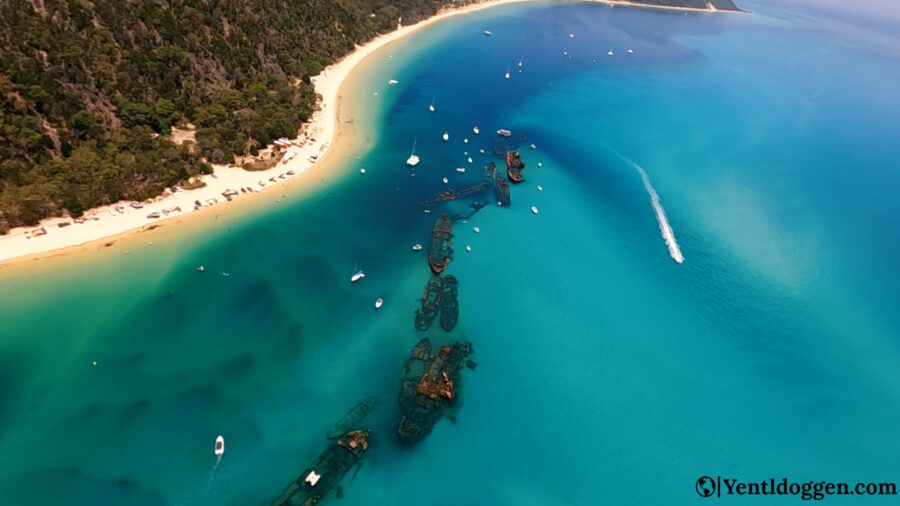
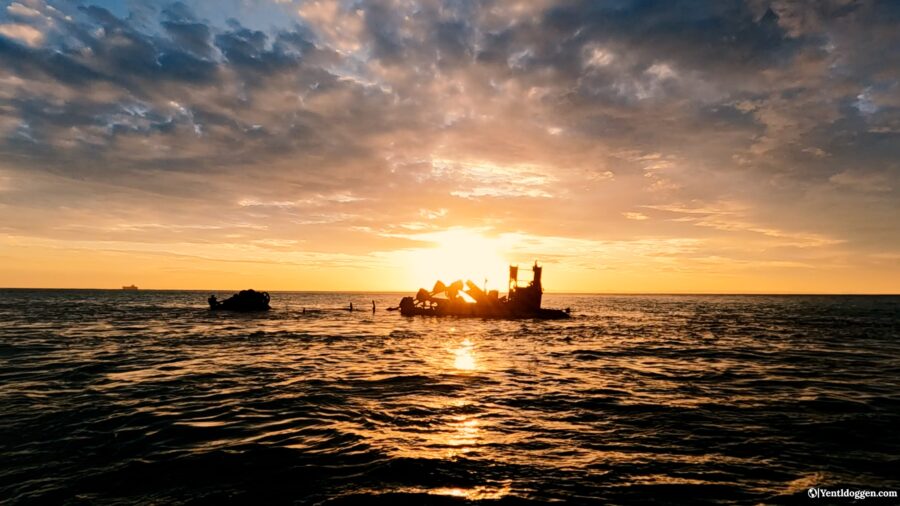
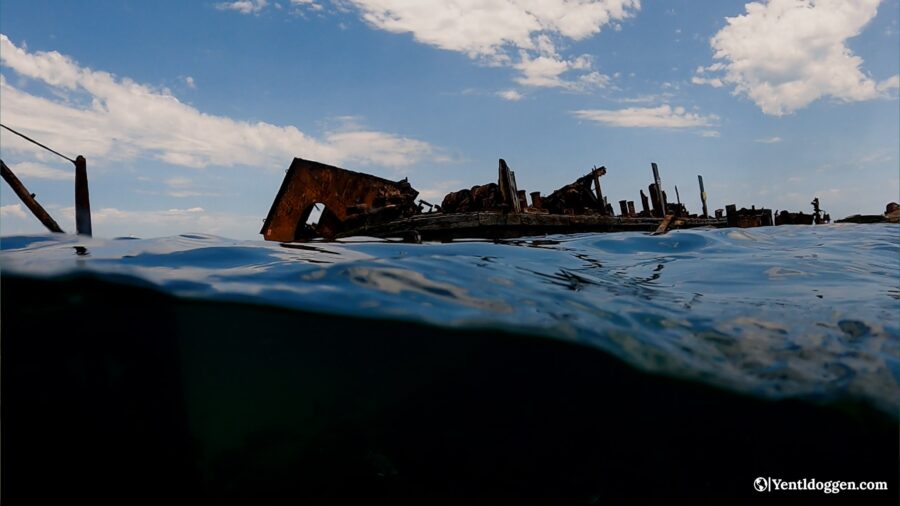
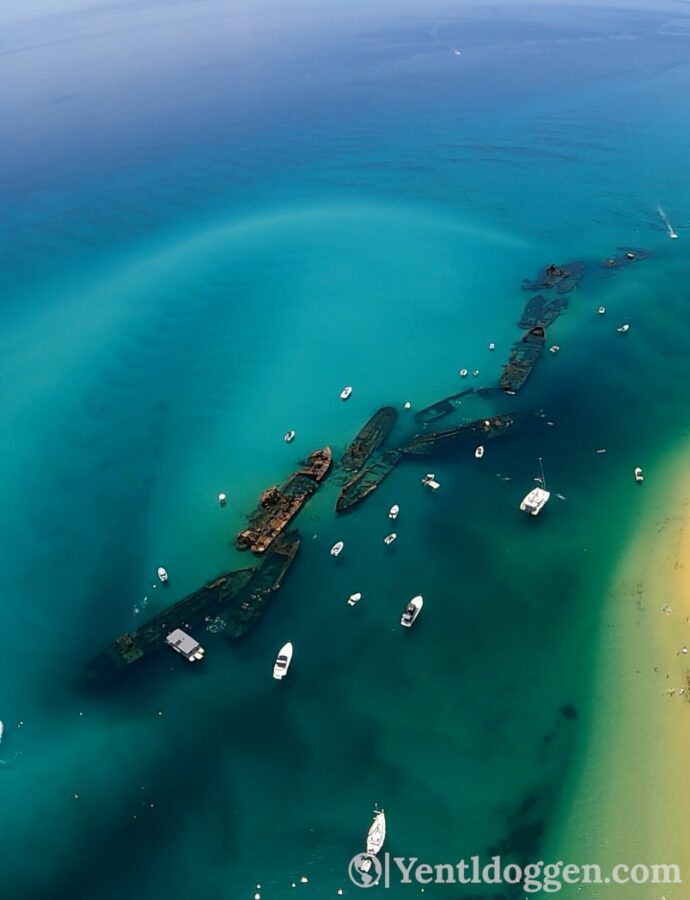
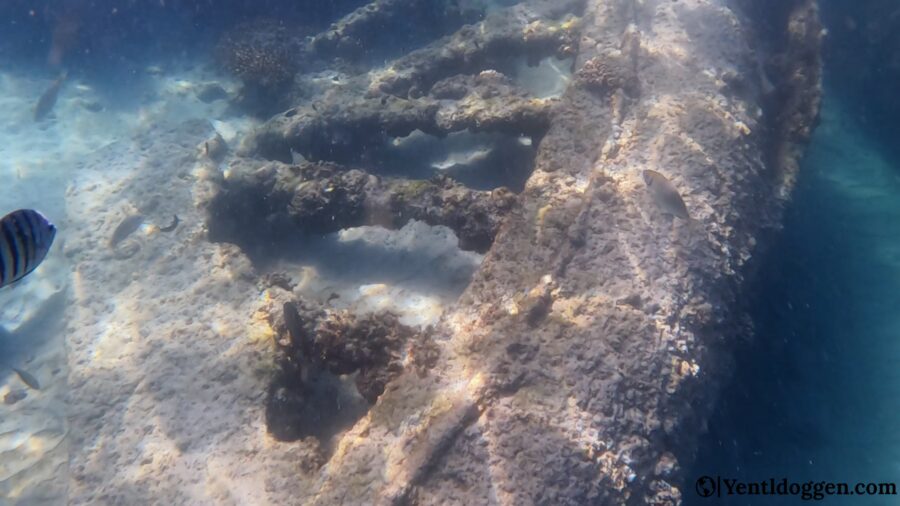
The Tangalooma shipwrecks are a group of 15 wrecks just off the coast of Moreton Island in Queensland, Australia. As Moreton Island doesn’t have a harbour or marina, the Queensland government intentionally sank these ships between 1963 and 1984. Altogether, these wrecks break up the swell and wind, creating a calm environment and a safe anchorage site for recreational boats.
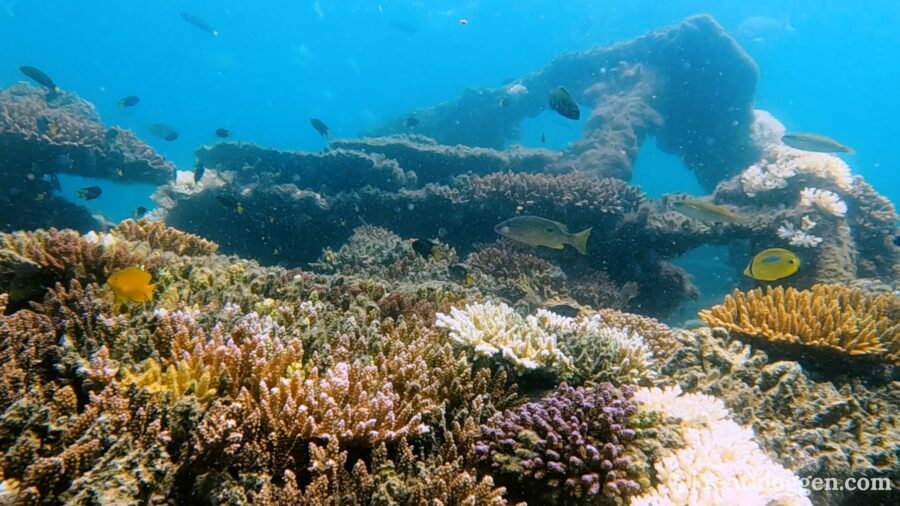
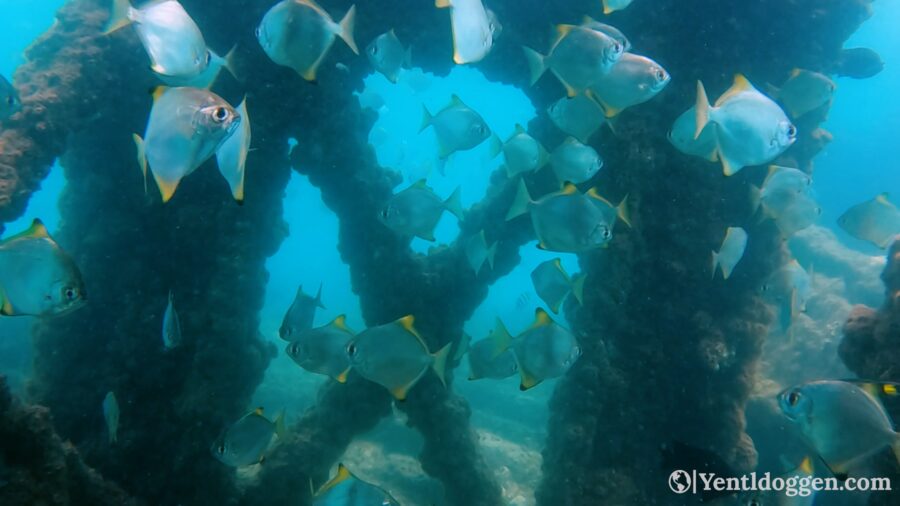
As these shipwrecks provide a large and stable structure likely to withstand weather events, multiple species of coral found a place to settle. Together with coral came lots of fish, making it one of the better artificial reefs in Australia.
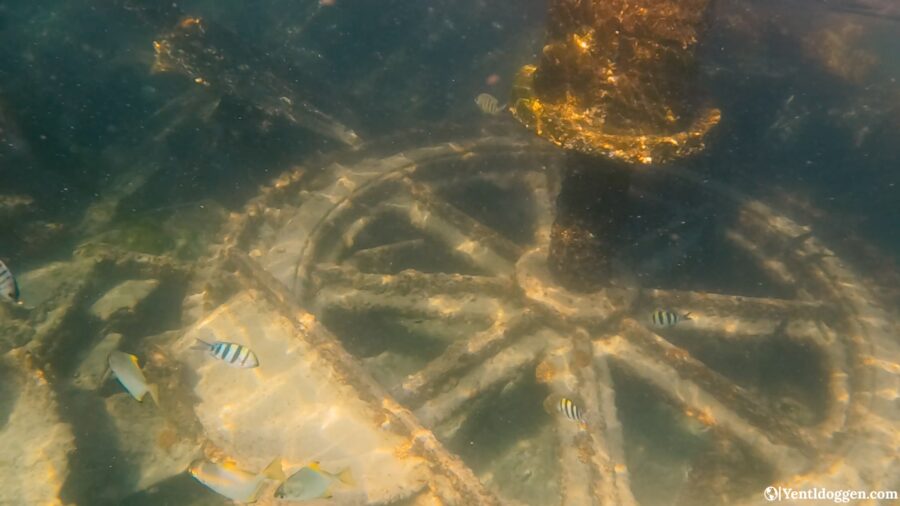
All boats that they sank had something to do with Moreton Island. As Moreton Island is the world’s third-largest sand island, most ships were used as barges, trawlers and dredges. When you go snorkelling the Tangalooma Wrecks, you can easily see the dredge buckets used to scoop sand off the island. The island’s sand has a high percentage of silicon, making it ideal for glass, concrete and other building supplies. Today the island is luckily protected as a national park, making it impossible to use any of its resources.
How to get to the Tangalooma Shipwrecks:
Getting to the Tangalooma Shipwrecks is easy, with various options leaving daily from Queensland’s capital of Brisbane. The shipwrecks are located about 1.5 km from Tangalooma Island Resort on Moreton Island’s western side. Once you get to Moreton Island, you are only a short walk away from the Shipwrecks. The only thing left is a 40-metre swim over the 12 metres-deep channel to start your adventures in snorkel town.
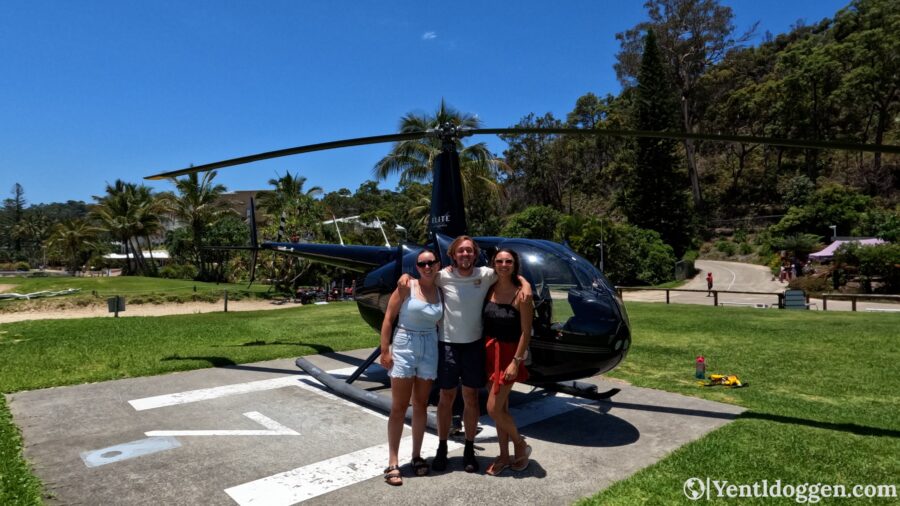
You will need to take the Micat, the Tangalooma Island Resort Ferry, your own boat, or a helicopter to get to the island. Please note that you can only take the Tangalooma Resort Ferry and helicopter service if you stay at the resort or hold a valid day pass. For more information about getting to the island, please see our Tangalooma Island Resort Guide here.
Self-guided snorkelling:
Snorkelling the wrecks without a tour is easy if you know what you are doing and pick the right day and time. Luckily, you have found this post, written with the knowledge after months of experience diving and snorkelling on the wrecks almost every day. Below, in the snorkelling on the Tangalooma Shipwrecks section, you’ll find a comprehensive guide on how to snorkel the Wrecks by yourself. We talk about everything, from currents, tides and winds and what gear you should bring to how the combination of all these factors will affect your experience.
However, if you are not a confident swimmer, we also line out all different tour options to snorkel the Wrecks with a tour guide. If there is anything you need to know about snorkelling the Tangalooma Wrecks, it is in this beginner’s guide to snorkelling the Tangalooma Wrecks!
1. Take a day trip or camping trip through the Micat:
If you have your own snorkel gear and are a confident swimmer, we recommend taking the Micat to Moreton Island and snorkelling the wrecks yourself! The Micat travels almost daily and operates on an ‘on-demand’ basis, so it can run anywhere between 1 to 5 services per day. Its anchoring place is next to the Wrecks, close to the additional campsite, so only a 2-minute walk to the Wrecks.
The Micat is the cheapest option and has very reasonable prices for foot passengers. Moreover, if you bring your camping gear, camping on the island is inexpensive, lowering the general cost of your stay. You can also bring your own car over on the Micat and drive around the entire island to get the most out of the trip!
2. Visit or stay at the Tangalooma Island Resort:
If you want to stay on the island, but feel like something other than camping, stay at Tangalooma Island Resort! The resort is located a little over 1.5 km from the wrecks making it easily accessible if you want to do a self-guided tour. If a stay is not your thing, Tangalooma Island Resort also offers various day passes, allowing you to use all resort facilities. Although snorkel gear is available on the island, it comes at a price, and we recommend bringing your own. Additionally, try to pack as lightly as possible, as there are no free options to store your stuff, even if you book one of their tours.
Snorkel equipment hire prices:
3 hours (mask, snorkel and fins): $45
Full day (mask, snorkel and fins): $55
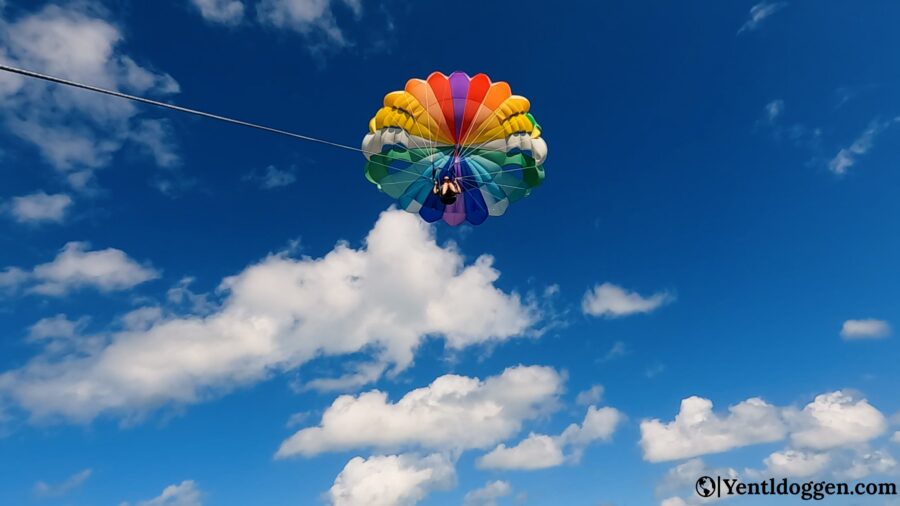
See the Tangalooma Shipwrecks on a Guided Snorkel Tour:
If you are not a confident swimmer, there are multiple options available to see the Tangalooma Shipwrecks. Two guided snorkel tour companies operate on the island, and two are available off-island. Below we line out all options to help you find the one that fits you best:
1. Tangalooma Island Resort: Guided Tours:
If you are staying at the resort or have purchased an appropriate day pass, you can hop onto one of the Tangalooma Island Resort guided snorkel tours! Operated by Tangatours, there are anywhere between 2 or 4 tours (depending on the season) per day, making it easy to find a time that suits you. Full gear (snorkel, mask, fins and wetsuit) is provided, as well as boat transfer to and from the wrecks with a snorkel guide to take you around the wrecks in the water. The tour lasts 1.5 hours, including briefing, transport, and 35 minutes of water time.
As a former employee of Tangatours, I can thoroughly recommend this tour. All tour guides are well-trained, and their guidelines are strict. Moreover, since Tangalooma Island Resort is very dependent on the future of these shipwrecks, Tangatours treats this place with the respect it deserves.
Price for house guests:
Adults – $79
Child (6+) – $65
If you are not staying at Tangalooma Island Resort and want a day trip with a snorkel tour included and a food voucher, you will need to purchase the Wrecks Day Cruise.
Guided snorkel tour – day cruise/pass:
Adults (14yrs +) – $159
Children (6-14 yrs) – $129
Includes: Return ferry transfer from Brisbane, lunch-, drink voucher, guided snorkel tour and access to all resort facilities for the entire day.
2. River to Bay: Guided tours from Brisbane:
River to Bay offers snorkel tours from Brisbane, Redcliffe & Sandstone Point. All-inclusive tours include snorkel gear hire and transportation, light snacks, and refreshments for the trip. Tours depart early morning and return just after lunch, around 1 pm. The minimum age for snorkelling is six years.
Prices:
Leaving from Brisbane:
Adults (15+) – $165
Children (6-14yrs) – $135
Two adults + two children –$550
Couples – $320
Leaving from Redcliffe & Sandstone Point:
Adults (15+) –$165
Children (6-14yrs) – $135
Two adults + two children – $550
Couples – $320
3. Sunset Safari: Guided tours from Brisbane:
Their day consists of more than just the snorkel, with kayaks and sand tobogganing; you get an entire day of activities on offer! Sunset Safari offers a Get Wrecked 1-Day tour to the Tangalooma Wrecks, with pick-up available from Brisbane city, Gold Coast, and Port of Brisbane. Departs Gold Coast at 5:45 am from the Mantra on View Hotel, Brisbane Coach Terminal at 7 am, and the Port of Brisbane at 7:30 am .
Prices:
Leaving from Brisbane –$269
From Gold Coast – $299
From the Port of Brisbane – $259
4. See Moreton: Guided tours from the Gold Coast:
Voted TripAdvisor’s #1 Brisbane Boat Tour, the See Moreton day trip has a full day of adventure and indulgence planned for you. With pick-up available from Brisbane city and the Gold Coast, you can snorkel the Tangalooma Wrecks, have a tropical buffet lunch, free island and beach time, kayak, and a Marine Discovery Cruise—so three adventures in one day! All this aboard a new $10 million catamaran with naturalist guides, fish feeding, paddle boarding, morning tea, and afternoon fruits .
Prices:
Adults (14+) –$269
Child (3-13yrs) – $159
Infants – free
Family (2 adults + two children) – $749
If you want even more indulgence and luxury, why not upgrade to the VIP Captain’s Lounge Seating? This VIP experience is just $40 more!
Snorkelling on the Tangalooma Shipwrecks:
Below we list all components to consider when planning your snorkel trip to the Tangalooma Island Shipwrecks. These help with self-guided tours and picking the best guided tour time. Please read and plan carefully to get the most out of your adventure.
Choosing the best time to snorkel or dive:
It isn’t always a sunny wind-free day in the middle of summer with perfect conditions to snorkel the Tangalooma Shipwrecks. Elements vary per day, and even on an ideal day, currents around the shipwrecks can suddenly surprise you. There are so many different components to snorkelling the Wrecks that it is an art to predict the best time to snorkel on a particular day. However, with the proper knowledge of all the elements, it’s much easier to narrow your options, so keep reading!
1. Tides:
It is possible to snorkel the Tangalooma shipwrecks at high and low tides. Yet, when it comes to accessibility, high tide is preferable as it makes navigation over shallow bits easier with more reachable areas. The chances of hurting yourself on the ships are much higher at low tide, and some areas will be impossible to see.
Keeping an eye on how significant the tide changes are is essential. The lowest tide at the Tangalooma shipwrecks is about 0.2 m, and the highest is about 2.3 m. If on your day the low tide is a 1 m low tide, snorkelling is much easier than on a 0.2 m low tide.
2. Currents:
The best time to snorkel the Tangalooma shipwrecks is as close to the tides as possible. Although high tide is the big winner for accessibility, it doesn’t make a difference whether it’s low or high for the currents.
The hour around high or low tide is perfect to avoid any currents influenced by the tides. The current slows significantly about an hour before and after the tide change, making it the ideal 2-hour timeslot to snorkel. For example: if high or low tide is at 11 am, the best time current-wise is 10:30 till 11:30 am. Yet, 10 am till 12 pm is very acceptable.
Currents are strongest between tide changes, and the way the current drags depends on whether it’s an outgoing or incoming tide. When the tide changes from high to low, the current will go from south to north or away from the resort. When the tide changes from low to high, the current will go from north to south or towards the resort. There’s no point swimming against the current, so it’s best to snorkel in the direction of the currents. If you choose to snorkel between tides, I recommend snorkelling with an incoming tide, as the north to south route is easier to manage the currents.
It’s essential to keep an eye out for how significant the tide change is. The current will be milder if the difference between high and low tide is only 0.6 metres. Yet, if the difference between the tides is close to 2 metres, you can get extreme currents at the shipwrecks. Even more so, the currents usually don’t affect swimming out or in from the beach, whereas tides on a 2-metre switch can make it hard even for advanced swimmers.
3. Wind:
As if the tides and currents aren’t enough to look out for, it’s also essential to keep an eye on the wind. Winds under 10 knots don’t affect the shipwrecks much, although winds between 10 and 30 knots do.
If you have 10- to 30-knot winds going in the same direction as the currents, you can expect the waves to push the current even harder. However, the opposite is also true: 10- to 30-knot winds opposite the current will slow it down slightly. Yet, the collision of waves and current will create some chop. If these winds come from the west, you can expect the waves to go over the shipwrecks and make snorkelling rough. A 10- to 30-knot wind from the East will only affect your snorkelling experience a little, as the island protects most of it.
Although it isn’t impossible to snorkel the wrecks in winds above 30 knots, it is strongly discouraged. It gets dangerous with such high waves, as it increases the chances of getting hurt by the shipwrecks. When the wind comes from the east, the waves at the wrecks will be minimal; but when it comes from the west, the swell can make it hard to snorkel. Please, if the wind is above 30 knots, have a good look at what the other circumstances are before swimming out. There aren’t any lifeguards around, so you must be confident. If nobody else is snorkelling at the wrecks, that is a sign—as all year round, these wrecks are a popular snorkel spot!
4. General weather:
Although the weather isn’t the biggest life-changer at the wrecks, it does play a part in your snorkelling experience. In heavy thunder and lightning storms, you should not be in the water at any time—wait for the storm to pass. Visibility-wise, it’s better to snorkel on a sunny day, and even better on a sunny week, as that improves visibility significantly. Rain doesn’t always affect visibility, although rainy weeks make a difference.
In summer, the water temperature is about 25°C on average. In winter, that average drops to about 19°C. Although swimming is acceptable in both periods, 19°C with cold winds isn’t ideal. Yet, I liked winter better, as fewer people mean less damage to the corals and a much more beautiful, healthy underwater world.
5. Other things influencing your snorkel
The Tangalooma Shipwrecks are busy and popular for various reasons and people. On school holidays, public holidays, or cruise ship days at the resort, snorkelling gets very chaotic. Avoiding these days is advised, as there are people and boats everywhere. Moreover, since there are barely any regulations on ships at the shipwrecks, people act like they own the place, creating hazardous situations for snorkellers.
On the other hand, it’s on these days that many people are around if something goes wrong. During school holidays, you’ll often find lifeguards patrolling the area; whereas on cruise ship days, the resort has extra people to keep a lookout.
What equipment should I take?
Whether you take a day trip by yourself or through any tour company, try to take as few items as possible. There are only a few places to store your stuff, and the available lockers come with a price. Make sure there is nothing to lose to avoid any unnecessary stress. Here are the items I would take for a stress-free day:
- Snorkel mask, snorkel, and fins: Avoid the hassle and prices of hiring snorkel gear—bring your own. If you do a tour, these items will likely be included.
- A towel: A day at the beach snorkelling the shipwrecks is better with a towel.
- Drinking water, food, and snacks: To use the facilities of the Tangalooma Island Resort, you’ll need a valid day pass. If you are staying at the campsite, ensure you are entirely self-sufficient.
- Wetsuit: Wearing a wetsuit for the temperatures isn’t needed, but a wetsuit significantly protects you from sharp and rusty shipwrecks. If you have a wetsuit, you should bring your own. If you need one, you can always hire one.
Additional must-knows for snorkelling the Tangalooma Shipwrecks:
Although most of Moreton Island’s wildlife and marine life are innocent, you are still in Australia. At the Tangalooma shipwrecks, we do have stonefish and lionfish. Being the number one and two deadliest fish in the world, you should keep an eye out for them. Encounters aren’t regular but happen once in a while.
1. Stonefish:
Stonefish dig themselves into the sand, making them hard to see. If you keep an eye out for these fish, they appear as grumpy rocks sitting at the bottom of the ocean. As a rule of thumb, you should not stand on anything that looks like a rock in the water. Stonefish do not chase you; their poison is a defence mechanism if you stand on them. Anti-venom is available, but it needs to be administered fast, as paralysis and death can occur within the hour. If you are stung by the spikes on their back, call the ambulance (000) immediately!
2. Lionfish:
In comparison to stonefish, lionfish are easy to spot. These very colourful fish are pretty cool to look at; however, their red, white, and black bands have venomous spiky fin rays. Lionfish are rarely fatal to adults but can be very dangerous to children, the elderly, and anyone with an allergic reaction. Their stings will cause extreme pain, vomiting, and breathing difficulties. If you see a lionfish, keep a safe distance. If you accidentally touch one of their venomous spiky fins, immediately call the ambulance (000)!
Wildlife and Marine Life at the Tangalooma Shipwrecks:
Since the addition of the last shipwreck in 1984, things have changed drastically. Coral started multiplying, and with that coral came lots of wildlife and marine life. Today, the Tangalooma Shipwrecks house up to 200 different species of fish and about 130 species of hard and soft coral. Below, I’ll give a brief overview of the most important species to watch.
Corals at the Tangalooma Wrecks:
As the Tangalooma Wrecks are at the edge of the tropical north and the temperate south, the coral species are a mixture of both. Also, since the water temperature varies between 19°C in winter and 25°C in summer, it houses specific corals that can withstand these changes. The most common species of coral found at the Tangalooma Wrecks is Staghorn Finger Coral. These types of coral can grow up to 30 cm a year.
Luckily, in Moreton Bay, the water is pretty healthy with very stable temperatures, preventing the coral from bleaching. The different colours of the corals come from the algae inside the coral, which provide the corals with food. The coral, in return, provides housing for much young fish that find a home at the Tangalooma wrecks.
It is crucial to remember that collecting corals is forbidden. Besides, you shouldn’t touch the coral. Not only can you hurt yourself, but it is also bad for the coral. Over the past few months, I worked as a snorkel guide at the Tangalooma wrecks. I have seen much damage from people stepping on coral or boats anchoring above corals. Please have respect for these corals if you are out on your snorkelling adventure.
Animals at the Tangalooma Wrecks:
Listing all 200 different species of fish, together with sharks, dolphins, dugongs, and rays, would be an impossible task. However, here’s a brief introduction to the most common and extraordinary things you might encounter while snorkelling the Tangalooma Wrecks:
1. Wobbegong Sharks:
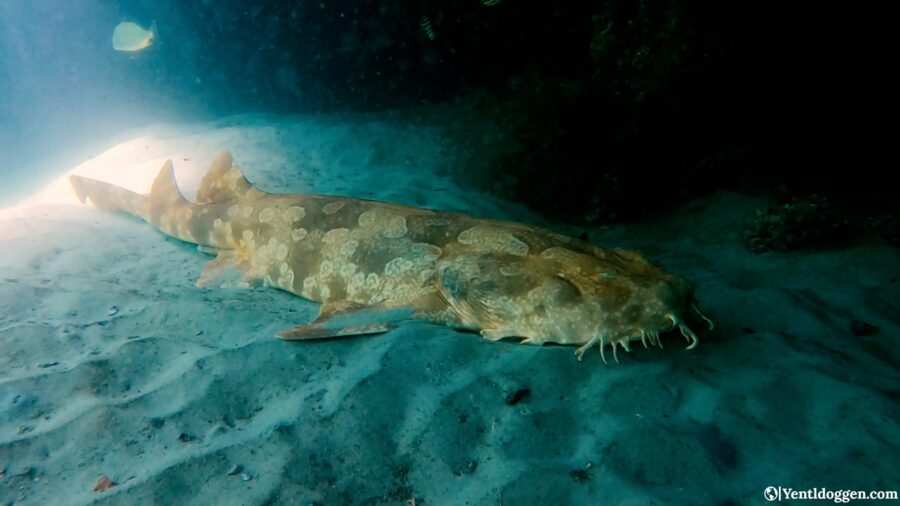
Although there is always a chance to see all kinds of sharks in the open ocean, the only species to inhabit the Tangalooma Shipwrecks is the wobbegong shark. These typical Australian sharks are born about 20 cm big but can reach a size of up to 3 metres.
The name wobbegong comes from the Indigenous word for Shaggy Beard. Wobbegong sharks are not dangerous to humans, although they are the only shark that can bite their own tail—so pulling its tail is probably a bad idea. They have a brown desert camouflage colour with whiskers off the front of their mouth. Since these sharks are nocturnal and only hunt for fish or crustaceans at night, you’ll probably see them sleep on the bottom of the ocean. Wobbegong sharks fall under the category of carpet sharks as they don’t have to swim to pass water over their gills. Instead, they have involuntary pumps to get oxygen to survive.
2. Turtles:
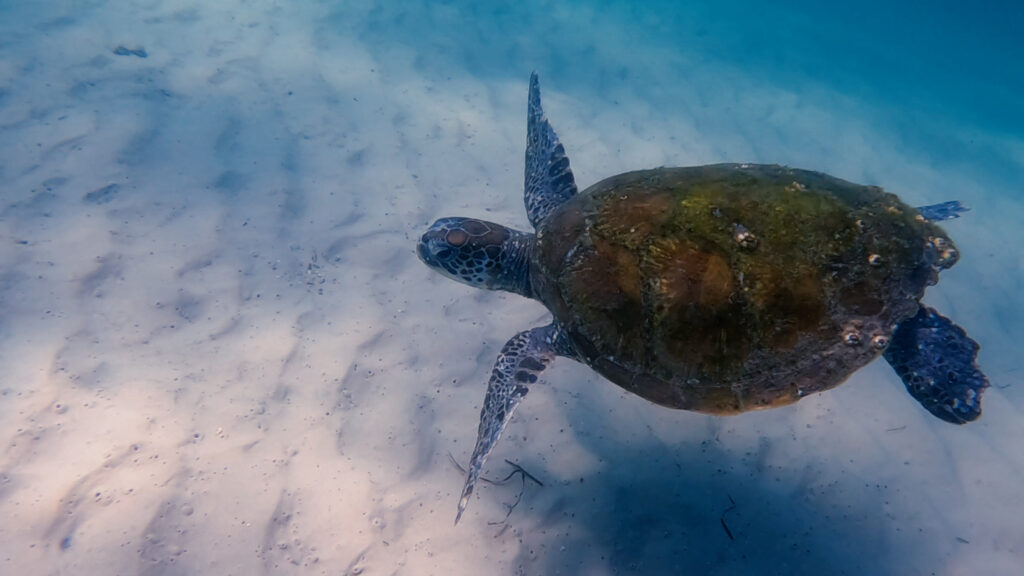
Moreton Bay is home to three species of turtles, and with some luck, you might encounter one on your snorkel adventure. If you see a turtle, please don’t touch it and give it space to come up for a breath if it needs to breathe. These turtles are very fragile and deserve to be left alone. Take nothing but pictures!
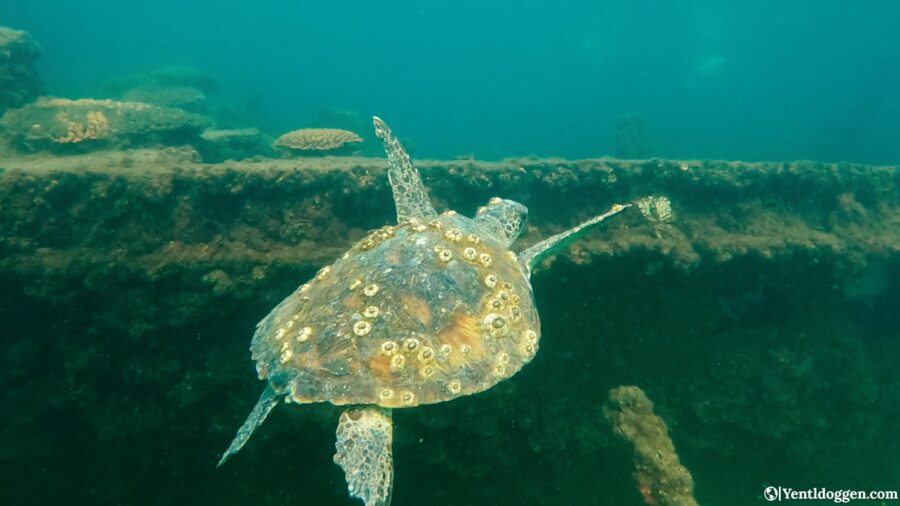
The green sea turtle is the most widespread in Moreton Bay. These turtles can grow up to 1.5 metres in length, exceed 80 years of age, and weigh up to 200 kg. Green sea turtles breathe every 5 minutes and even hold their breath longer if needed. Sometimes we see turtles “dance” on the wrecks because they are trying to get rid of the barnacles on their shells. It is estimated that there are about 10,000 green sea turtles in the entire bay.
Less widespread in Moreton Bay are the loggerhead turtles. You’ll know you see a loggerhead turtle if it has a very brown colour and its head has a log shape. Unlike the green sea turtles, these turtles feed on more than just sea grass and like to add small fish, crustaceans, and sea urchins to their diet. It is estimated that there are about 2,000 loggerhead turtles in the bay.
The last species of turtle you might encounter is the hawksbill turtle. However, these turtles are critically endangered, with their population decreasing yearly.
3. Stingrays:
Moreton Bay is home to 6 different species of stingrays. The most common is the blue-spotted lagoon ray. These rays have a grey colour with blue spots and two black stings at the back of the tail. With their 70 cm in length and 30 cm wide, they are the smallest rays around the shipwrecks.
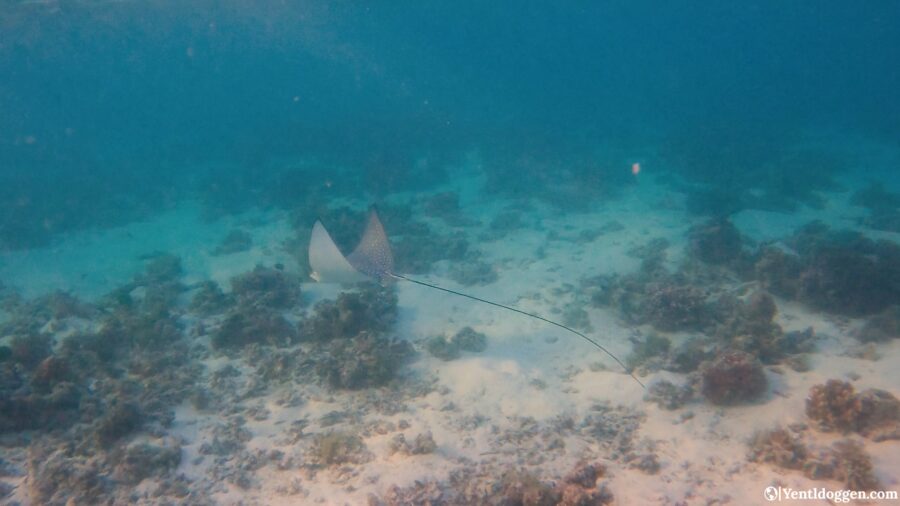
Other rays include the bull ray, which reaches sizes of almost 2.5 metres long and 1.5 metres wide. The shipwrecks sometimes get eagle rays as well, defined by their navy blue appearance with small white spots. In contrast to other rays, the shape of an eagle ray is triangular. However, consider yourself lucky to see these rays as they only appear once a month.
A little bit deeper, you can spot shovelnose rays on the bottom of the ocean. These rays are commonly mistaken for sharks due to their small dorsal fin. They grow up to 2.7 metres in length and are well-known for their long pointy snout.
4. Dolphins:
There are about 600 dolphins that call Moreton Bay their home. Although these are rarely spotted while snorkelling, you will likely see one during your stay on Moreton Island. The dolphins in the bay are inshore bottlenose dolphins that can live up to 45 years old.
These dolphins feed on small fish and take advantage of human activities to get fish. Fun fact: inshore bottlenose dolphins are conscious breathers. They sleep with only one half of their brain at a time. The other half of the brain stays alert to regulate breathing.
Are the Tangalooma Shipwrecks worth it?
In short, yes! There are so many reasons to go to the Tangalooma Shipwrecks; we could make a whole other post, but you will never regret going! Not only will you get some stunning photos and footage, but you will also discover and explore an incredible underwater world—spot turtles, different corals, wobbegong sharks, and maybe even a dolphin out at the wrecks.
We hope this guide helps you plan your next adventure to the Tangalooma Shipwrecks or inspires you to visit them. Just over an hour on the ferry from Brisbane lies this underwater wonderworld full of life and colour, just waiting to be explored. This travel guide contains everything you need to know about snorkelling the wrecks, either by yourself or on tour. Don’t hesitate to contact us on the contact page if you have any questions or concerns.
Are you enjoying reading our travel guides? Please let us know in the comments below! If you need help or have questions about exploring this fantastic world, check out all our blogs and vlogs or contact us through the contact page. We are happy to help with all your travel needs and questions!
To keep up-to-date with future adventures and travel guides, follow us on Facebook or just simply check this website regularly. We can’t build this platform without our readers, so we thank you for your continued support. Stay tuned for many more adventures to come!