
Discover the Wild Beauty of Kakadu: The Ultimate Guide
If there is a National Park you should visit in the Northern Territory, Kakadu National Park is the one you need to see. Covering nearly 20,000 square kilometres, it is the second-largest national park in Australia and a UNESCO World Heritage Listed site. Just over three hours from the Northern Territory capital of Darwin, Kakadu National Park will look completely different depending on what time of year you choose to visit, so no matter how many times you visit, you will get a new experience. In this Ultimate Guide to Kakadu National Park, we have outlined everything you should know before going, what you can do in the park, and much more. Enjoy this guide, then go out and enjoy the wild beauty of Kakadu.
Is the Kakadu National Park worth visiting?
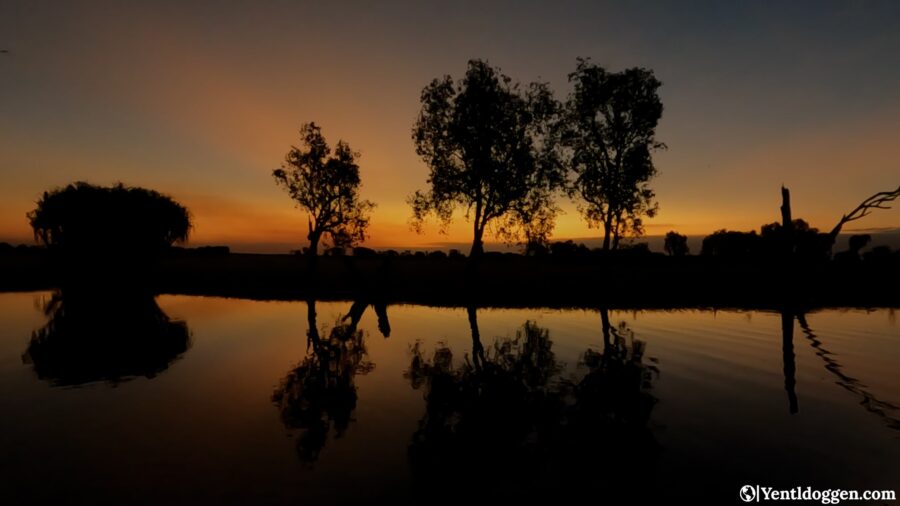
Kakadu National Park is a must-visit location. It is World Heritage Listed for not just its culture but also its outstanding natural values. With some of Australia’s oldest and best-preserved rock art, Kakadu National Park gives unparalleled insight into the Indigenous history and way of life while exposing people to its ever-changing landscapes. Moreover, there is something for everyone to do in the park. Enjoy a jumping croc cruise on the drive-in, or learn more about the culture in the information centres or through an Indigenous tour. Hike some excellent walks through the park, or admire the landscapes from your campground.
Do you need your own vehicle to explore Kakadu National Park?
While you can join a tour company to explore Kakadu, we highly recommend taking or hiring your own vehicle to explore the park. It is the best way to get the most out of your trip and give you the most flexibility. If you have little time, a tour is still a good option, but it does not give you the same experience. If you need to hire a car or van, make sure you do it well in advance for peak season so you don’t miss out!
What is so special about Kakadu National Park?
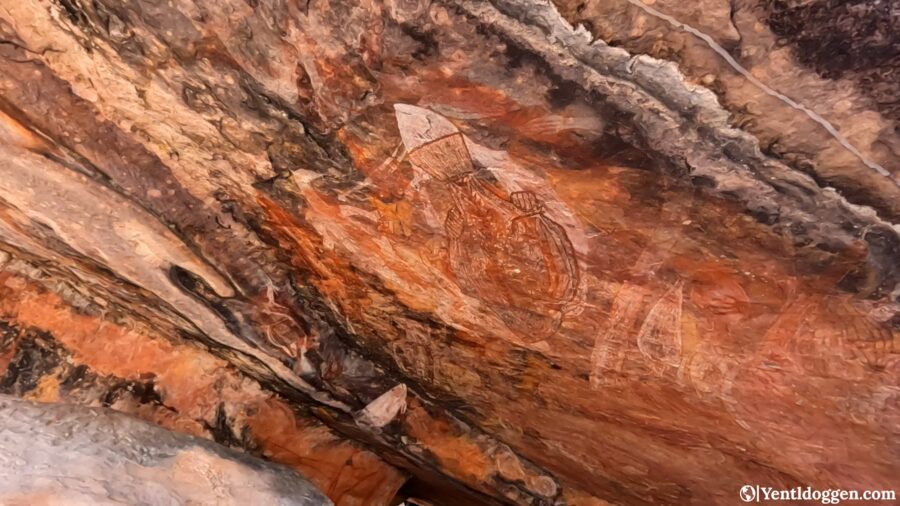
Kakadu National Park is unique and special for several reasons. Not only does it have a wealth of Indigenous Australian cultural heritage and some of the oldest and most well-preserved rock art sites, but it is also an incredible natural wonder. Kakadu has an incredibly biodiverse ecosystem, and the landscape changes dramatically throughout the year—from floodplains to dry dirt, all within weeks or months.
How to get to Kakadu National Park:
Getting to Kakadu National Park is easy. Accessible via two main highways, it is an easy drive into the park for all vehicle types.
1. Darwin to Kakadu National Park (Jabiru):
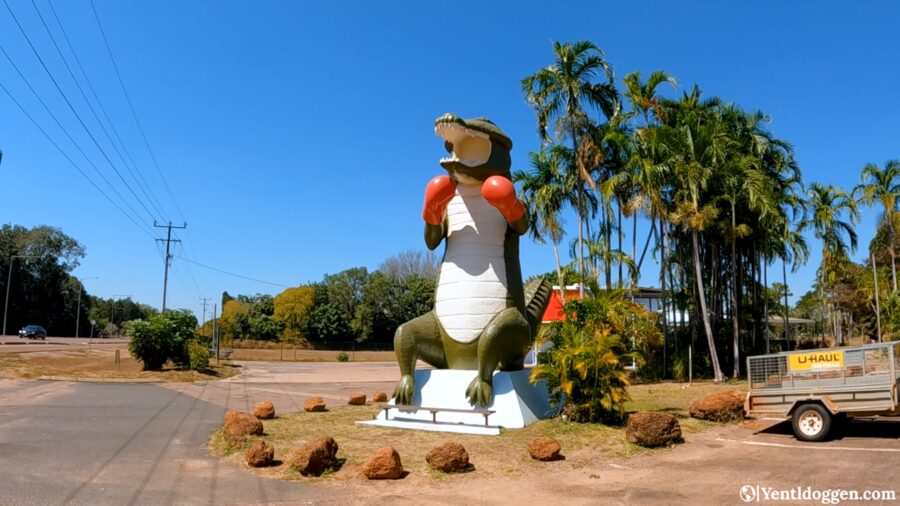
From Darwin, take the Stuart Highway until you come to the Humpty Doo left-hand turn-off onto the Arnhem Highway. Follow the highway into the park, but don’t miss out on some of the iconic stops along the way, like the Humpty Doo boxing croc, the jumping croc tours in Adelaide River or the Kakadu National Park sign. The trip to Jabiru from Darwin should take around 3 hours.
2. Katherine to Kakadu National Park (Jabiru):
Starting on National Highway 1/Stuart Highway, stay on the highway until you reach Pine Creek. From Pine Creek, turn right onto Kakadu Highway/State Route 21 and follow until you reach the Arnhem Highway. Then turn right and follow into Jabiru. The trip to to Jabiru from Katherine should take just over 3 hours (305km).
How long should you spend in Kakadu National Park?
How long is a piece of string? When planning your trip, figuring out how long you need to spend in Kakadu National Park can be very difficult. The park is massive, and there are so many different sites to visit it can be hard to decide where to start. We spent four days and three nights in the park, but we wished we could have stayed longer as it felt slightly rushed to get around. Therefore, we recommend a minimum of 4 days, but for a more comfortable and relaxed pace, 5 or 6 days. If you have a 4WD, you can see more options in the park. As such, we recommend a minimum of 5 days to explore.
Do you need a permit for Kakadu National Park?
You need a permit to visit and enter Kakadu National Park. Passes allow you to enter the park and include the guided ranger activities and information. The money from the passes contributes to the management of Kakadu National Park and the maintenance of infrastructure and tourism services. Moreover, a large portion of the money goes to the traditional owners of Kakadu National Park, the Bininj/Mungguy people.
With proof of residency, Northern Territory residents do not need to purchase a parking permit to enter.
Where to get permits/passes for the Kakadu National Park:
Online is the quickest and easiest way to get a Kakadu National Parks to pass. However, there are also multiple locations where you can pick one up. To purchase a permit in person, see the below locations:
- Bowali Visitor Centre, Kakadu National Park, Kakadu Highway, Jabiru
- Cooinda Lodge, Kakadu Highway, Cooinda
- Corroboree Park Tavern, 3095 Arnhem Highway, Marrakai
- Humpty Doo Post Office, 340 Arnhem Hwy, Humpty Doo
- Katherine Visitor Centre, Stuart Highway and Lindsay Street, Katherine
- Mary River Wilderness Retreat, Arnhem Highway, Humpty Doo
- Two Rivers Newsagency, Jabiru Shopping Plaza, Jabiru
- Wildman Wilderness Lodge, Point Stuart Road, Mary River
- Youthshack Hostel, 69 Mitchell St, Darwin
Kakadu National Parks permit prices:
Depending on the season, there are different pass prices on offer. It is cheaper to visit during the wet or Tropical Summer season as fewer travellers are around the area.
Dry Season (15 May – 31 October)
Adults – $40 per pass
Children (5-15 yrs) $20 per pass
Family (2 adults + 2 or more children) $100 per pass
Concession (Australian aged pension, disability pension, Seniors Card or Australian Veteran) – $30 per pass.
Wet Season (1 November – 14 May)
Adults – $25 per pass
Children (5-15 yrs) $12.5 per pass
Family (2 adults + 2 or more children) $65 per pass
Concession (Australian aged pension, disability pension, Seniors Card or Australian Veteran) – $19 per pass.
Please note that passes are only valid for seven days.
Best time to visit Kakadu National Park:
Kakadu National Park is located in the tropical Top End of Australia and thus is affected by the wet and dry seasons. The wet season is characterised by high humidity, hot temperatures and lots of rain (hence the name). The dry season is characterised by cooler weather, less humidity and little to no rain. However, an even better way to look at the separation of seasons in Kakadu National Park is through the Indigenous seasons guide. Indigenous Australians recognise six different seasons in Kakadu, and this further informs you about what activities and what the weather will be like during your stay.
Bangkerreng – storms
Yekke – cool but humid
Wurrkeng – cold weather
Kurrung – hot and dry
Kunumeleng – per-monsoon
Kudjewk – monsoon
The busy period for the park is from May to September during the ‘dry’ season, or the Yekke, Wurrkeng and Kurrung seasons. The weather is less intense during this period, and all roads are generally open. If you plan to visit Kakadu National Park during this period, make sure you book well in advance, as many tours, accommodations and travel are booked out early.
However, if you do not mind the heat or rain, the ‘wet’ season is also an incredible time to visit the park. In October (Kunumeleng), it gets hotter and more humid as the first wet season rains come in. The park becomes a glorious green landscape, utterly different from the dry season’s yellow and brown tones. Check road conditions regularly, as from December through to April, many roads can be closed due to park flooding.
Things you need to know before visiting Kakadu National Park:
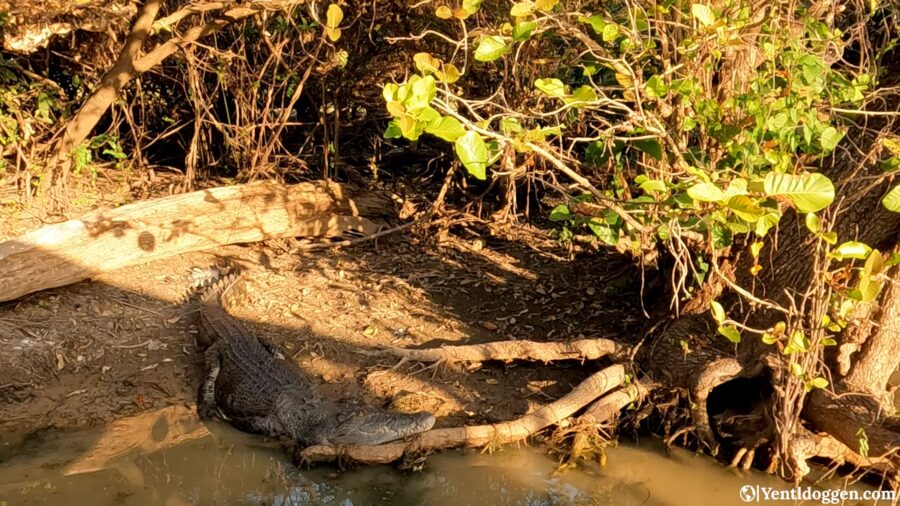
- Be Croc-Wise. Saltwater (estuarine) crocodiles are aggressive and dangerous. People have been attacked and killed in the past in Kakadu National Park, so stay vigilant and obey all signage. Crocodiles inhabit a large section of the park where water is present, including floodplains, billabongs, creeks, rivers, and so on. Never walk close to the water’s edge, and never swim unless signage says it is safe to swim. There are very minimal swimming spots in Kakadu National Park, so always assume there are crocodiles in every body of water.
- If you are boating, never stick your arm or any part of your body out of the boat over the water. While you cannot always see them, crocodiles can lurk under the water and jump out at any moment and grab you. Be especially careful putting boats in the water, and do not step into the water.
- You cannot touch rock art. Please stay behind the barriers to protect this incredible cultural heritage.
- Obey all park signs and warning signs. They are there to protect you. Furthermore, do not enter areas where gates are locked.
- Camp only on designated campgrounds.
- Sunrise Sunset clause. Make sure to check your hire vehicles contract for the sunrise sunset clause. Some companies put this into the contract that basically makes any insurance null and void after dark. Therefore, if the clause is in place, if you have an accident after dark, you will not be covered by insurance, thus making you liable for all costs regardless of how much insurance you took out.
- Make sure you get offline maps. Some park sections are out of range, so it’s better to have them just in case.
- Always check the Kakadu Access Report for all the up-to-date information about what is open and closed in the park.
- Check the Ranger-Guided activities available at the park during your stay to see which ones you can get too.
What to bring to Kakadu National Park:
Besides all the usual essentials such as food and clothing, there are some other essential things that you should bring to Kakadu National Park:
- Bug spray/repellent
- Mosquito coils
- Sunscreen/sunglasses and a good hat
- Water jerry cans to fill up your water supply
- Portable charges
- Offline maps
- Card games for nighttime activities
- Bin bags or a rubbish container to keep your rubbish separate until you can dispose of it.
- Lightweight, breathable clothing
- Head torch
- First-aid kit (with compression bandage in the unlikely event of a snake bite)
- Hydralyte
- Some small change for campsites
Where can you get fuel in Kakadu National Park?
There are only two locations in Kakadu National Park where you can get fuel: Jabiru and Cooinda, so make sure you fill up here before exploring any further!
Where to stay in Kakadu National Park:
Seeing Kakadu National Park in just one day is not an option. You need at least 3-4 days to explore and enjoy everything the park offers. Therefore, you need to find accommodation in the park! As there are many different options, we have made it its own post—the Complete
Top things to see on the way to Kakadu National Park:
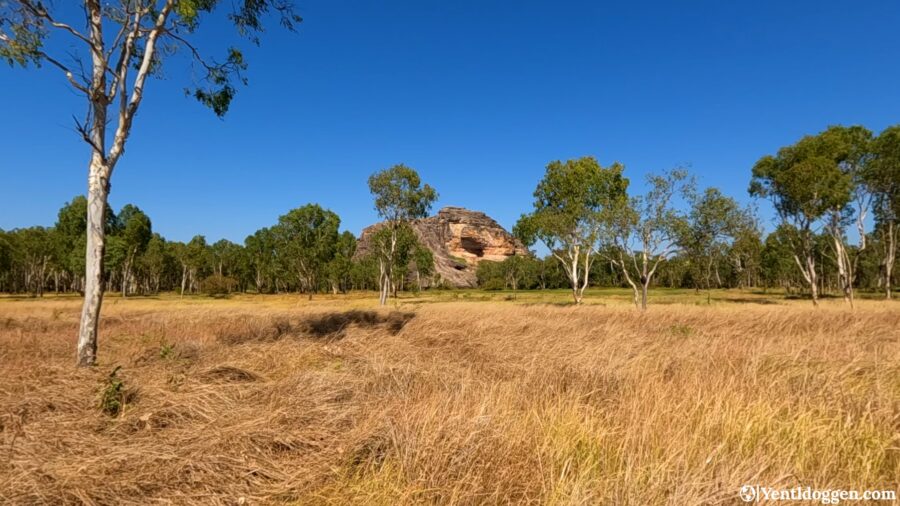
Being almost a three-hour drive to the park from Darwin and Katherine, you will want to break up the trip somehow. Luckily, there are some incredible and unique stops on the way that are perfect pit stops!
1. Heading to Kakadu from Darwin:
Humpty Doo – The Boxing Crocodile:
340 Arbhem Highway, Humpty Doo NT 0836.
Located just after the turn-off onto the Arnhem Highway, The Boxing Crocodile is a great first stop to stretch your legs and get some photos. Situated next to a service station, it is also an excellent
Fogg Dam Conservation Reserve:
Fogg Dam Road, Humpty Doo, NT, 0836.
One of the few wetland systems accessible all year, Fogg Dam Conservation Reserve is about 70 km into the journey from Darwin. The dry season is the best time to view the incredible bird life. Two boardwalks are available in the wetland area that let you further explore its beauty. Shaded viewing platforms are also included on these boardwalks, so remember your camera! Similar to Kakadu, Fogg Dam Conservation Reserve continues to be enriched by the strong connection with the traditional owners—the Wulna People.
Wetland View Top Centre:
1599 Arnhem Highway, Lambells Lagoon NT 0836
The Window on the Wetlands Visitor Centre is open daily from 8 am to 5:30 pm and is another great spot for views of the wetland regions. Further, it is also a great spot to stop for a snack, with a cafe and gift shop included. The Window on the Wetlands Visitor Centre is also wheelchair-friendly/accessible.
Jumping Crocodile Cruises on the Adelaide River:
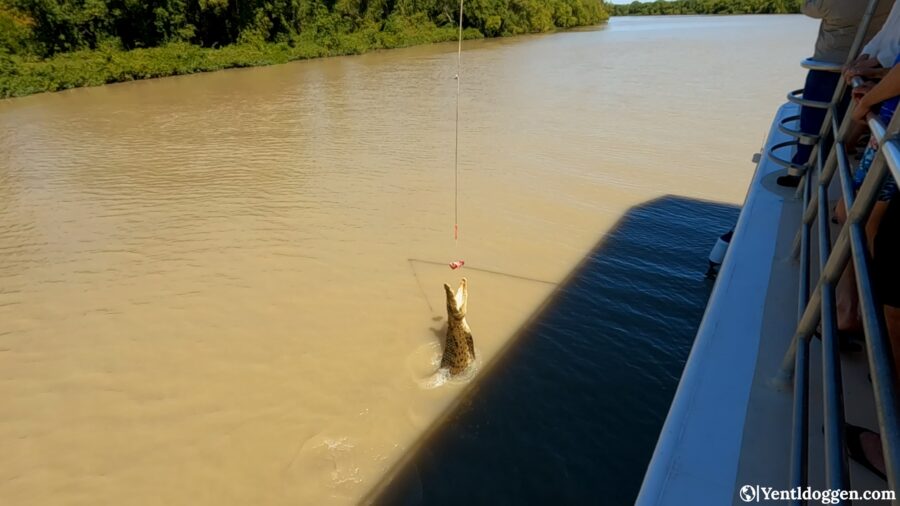
Not to be confused with the township next to Litchfield National Park, the Adelaide River is home to the infamous Jumping Crocodile Cruises! Watch these massive saltwater crocs jump vertically out of the water from the safety of one of the cruise boats. An experience that everyone will enjoy and never forget, this is an adrenaline show and educational, as the guides tell you a little about each crocodile.
Wetland safari/boating/air boating cruises:
Corroboree Billabong
If you love the wetlands, why not take a wetlands cruise on your way into Kakadu National Park? Choose from a safari experience or even an airboat cruise.
Corroboree Tavern:
The Corroboree Park Tavern is a classic Northern Territory pub situated halfway between Darwin and Kakadu National Park. Stop for a beer and a meal before heading into the park. If the travel makes you weary, you can even stop and stay at their campgrounds or book a cabin.
The Kakadu National Park Sign:
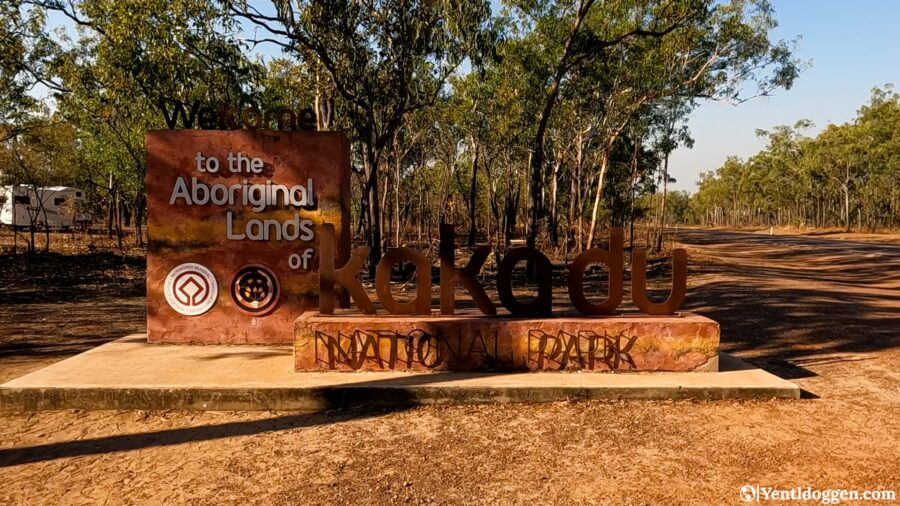
On the border of Kakadu National Park is the official welcome sign, which is a must-do last stop on the way into the park. An excellent place for a photo and a short walk, there are also toilet facilities and a car park to stop and rest for a while. There are usually some other travellers around, so make sure to offer to take their photo, and they will take one for you too!
2. Heading to Kakadu from Katherine:
Edith Falls
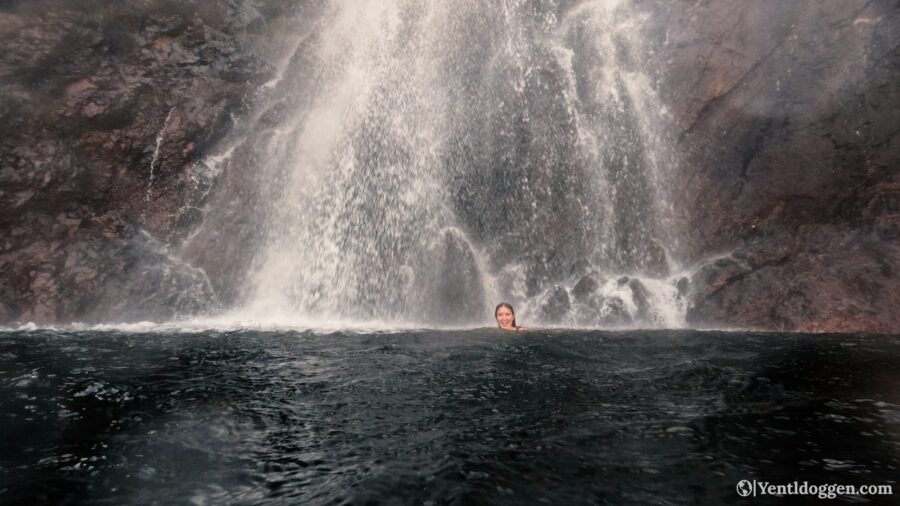
60 km north of Katherine lies Edith Falls. Walk straight from the car park to the massive first plunge pool for a quick cool-off, or head out onto the Leliyn Loop Walk. The walk takes you through the upper and middle pools, with incredible lookouts. Edith Falls plunge pool can be extremely deep in places. Therefore, we recommend taking a pool noodle per person if you want to lie and relax in the water. If you feel drowsy, you can also camp at the Edith Falls campground.
Top sights in Kakadu National Park:
1. Northern Kakadu:
Cahills Crossing:
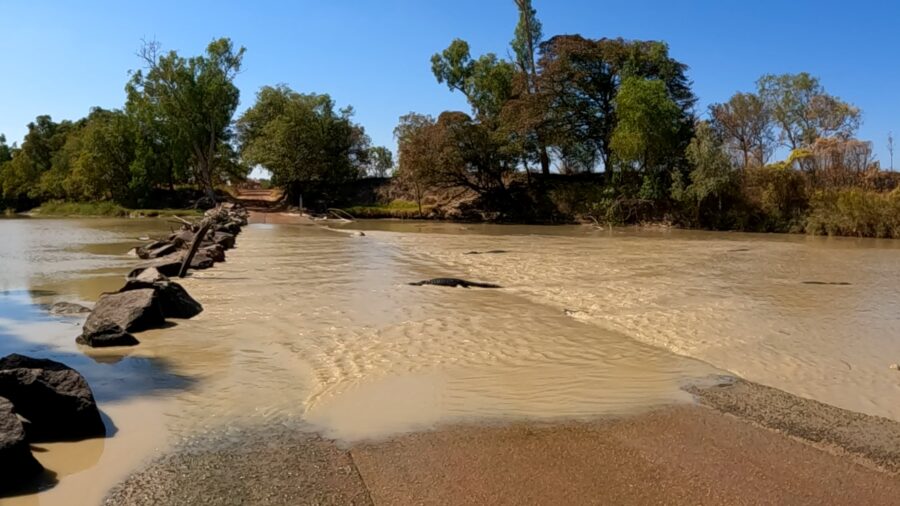
Debatably one of the most famous locations in Kakadu, Cahills Crossing links Kakadu National Park to Arnhem Land. Arnhem Land is one of Australia’s most significant Aboriginal-owned reserves and some of the most beautiful country in the Northern Territory. However, that is not what makes it famous. The crossing lies across the East Alligator River, home to countless saltwater crocodiles. As the tide rises, watch as the crocs hunt over the pass as fish start to swim across the road. It is an incredible and unique thing to watch. It is best to visit at high tide, so check the tides to find the best time of day to visit.
Please make sure you stand well away from the water at the crossing. Do not attempt to walk across the intersection; it is only open as a vehicle crossing for safety. Saltwater crocodiles are aggressive and can hide under the water.
Ubirr:
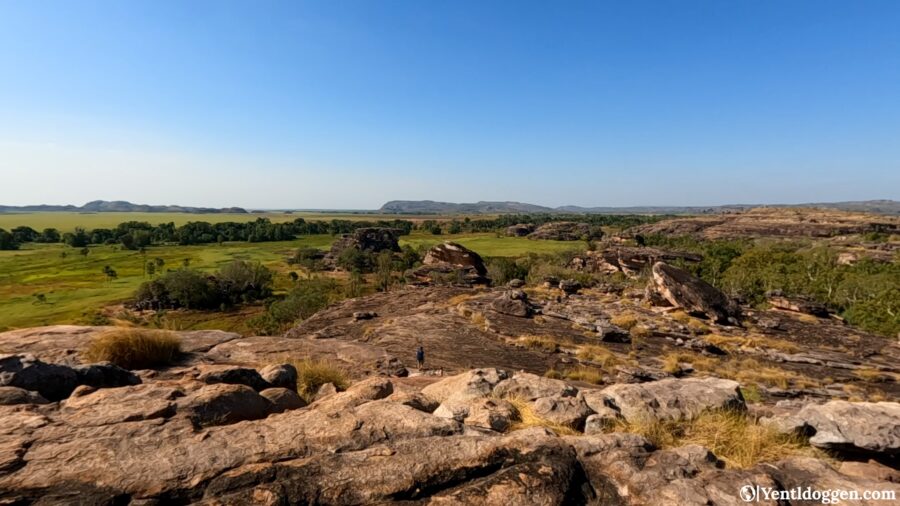
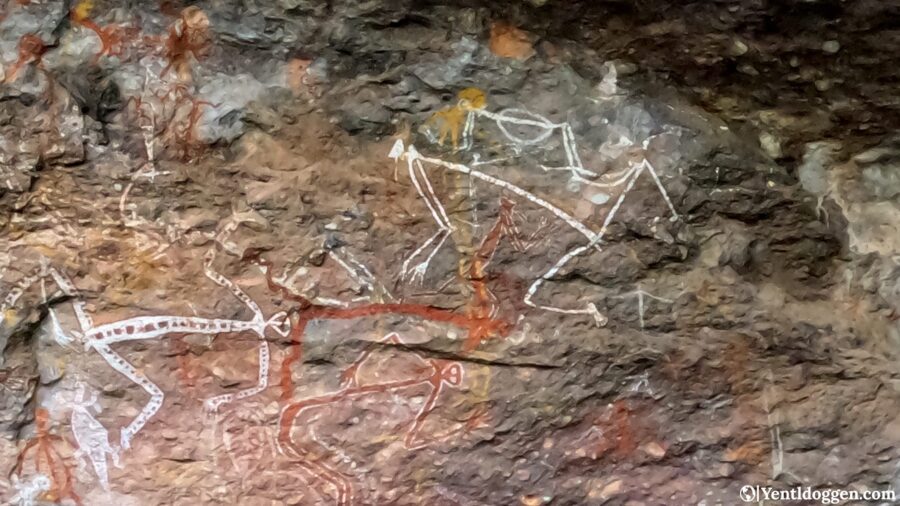
Ubirr cannot be missed. Open daily from 8 am to sunset (check seasonal variations), make sure you allow ample time to explore this site. Containing some of the most outstanding and well-preserved rock art in the world, Ubirr is one of the reasons that Kakadu National Park became a dual World Heritage Listed site. Some galleries exhibit rock art depicting the Tasmanian tiger (believed to have become extinct some 2,000+ years ago on the mainland), creation, contact and x-ray art. Walk around the galleries before climbing to the summit of the Ubirr lookout for extraordinary 360-degree views across the northern section of Kakadu National Park.
Ubirr is the perfect location for an incredible sunset. Make sure you check your hire vehicle’s contract for the sunrise/sunset clause just in case you are not covered to drive in the darkness. If you wish to camp somewhere close, you can camp at Merl, only a few minutes’ drive from Ubirr. Camp costs $15 per person and includes showers and toilets.
Manbiyarra (Border Store):
Located near Cahills Crossing and Ubirr, Manbiyarra (Border Store) sells Indigenous art and rock art tours in Arnhem Land. Furthermore, it is an Indigenous-owned and charitable non-profit organisation. A great stop to see some local art and culture.
Gulutambi Cultural Cruise on East Alligator River:
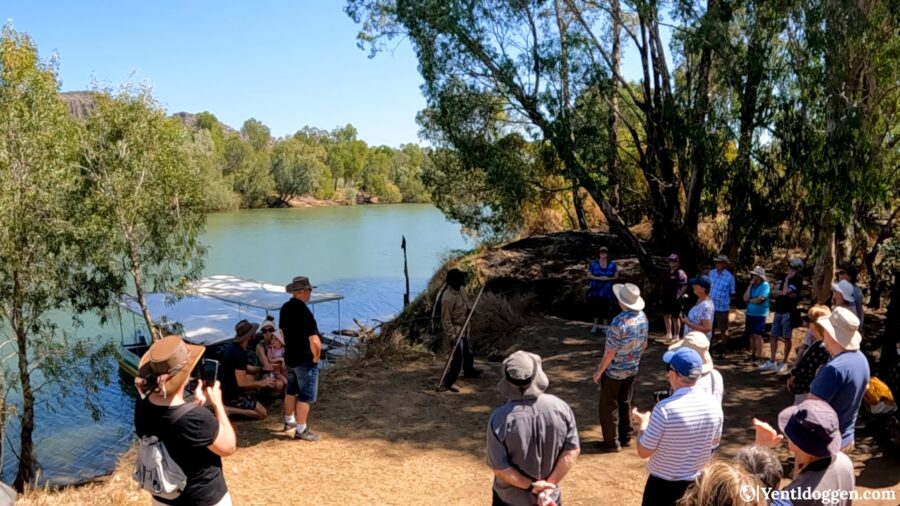
We highly recommend the Guluyambi Cultural Cruise on the East Alligator River if you want to learn more about Indigenous culture, mythology, and traditional hunting and gathering techniques. Cruise along to Cahills Crossing before heading downstream and stopping for a quick exploration of Arnhem Land. The tour runs for around 2 hours and is only available during the dry season. Tours depart daily at 9 am, 11 am, 1 pm and 3 pm.
Prices
Adults – $92
Children (4-14yrs) – $58
2. Central Kakadu:
Jabiru:
The main township in Kakadu National Park. Jabiru is an excellent base for your trip to Kakadu National Park, as it has plenty of accommodation to choose from and is nice and central. Jabiru contains all the services needed while visiting the park, including a shopping centre, medical clinic, pharmacy, service station, workshop, police station, and much more.
Mamukala Wetlands:
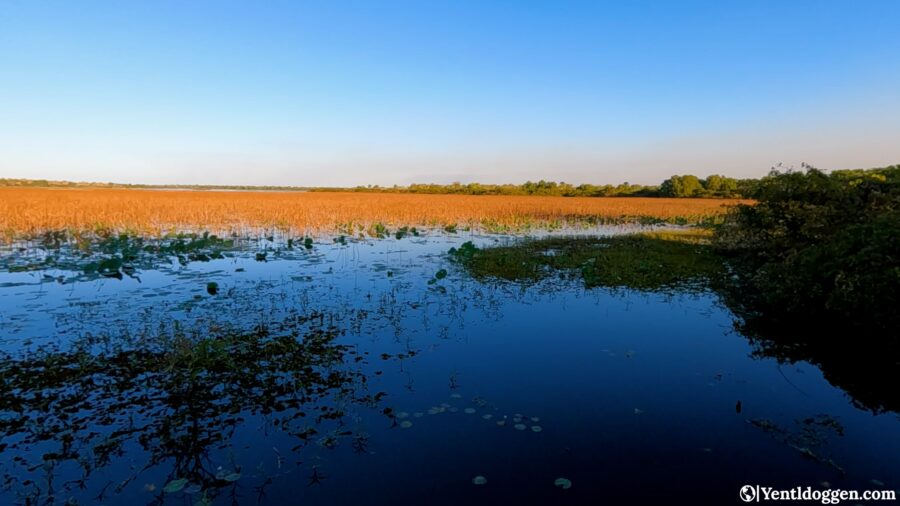
Kakadu National Park is home to one-third of Australia’s bird species, some of which are not found anywhere else in the world. Best visited on your drive into the park along the Arnhem Highway, Mamukala Wetlands is a bird-lover’s paradise. A short walk takes you to a viewing platform where you can view an astonishing array of bird life. It is a short walk to the observation deck, and it is wheelchair accessible. If you
Scenic flight over Kakadu National Park:
If you have time while in Jabiru, try and catch a Kakadu scenic flight! See the park’s majesty from above and experience more of the wonders. A truly unforgettable experience and a unique way to see the park. Some operators include:
Kakadu Air – Prices start at $159 for half an hour.
North Australia Helicopters – Prices start from $240 per person for a 20-minute flight.
Bowali Visitor Centre (Park Headquarters)
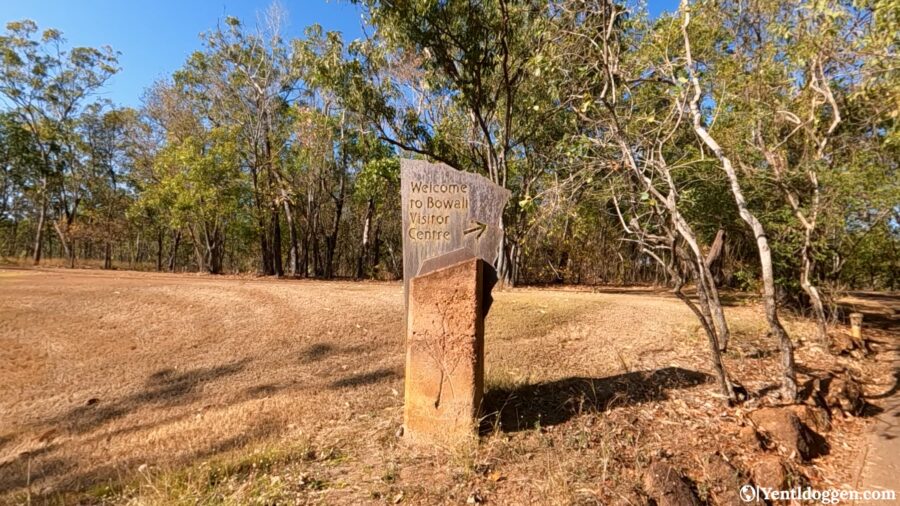
Open every day from 8 am to 5 pm (seasonal variations: dry 9 am–5 pm April–October; wet 10 am–4 pm November–March; closed Christmas/New Year’s), the Bowali Visitor Centre can answer all your questions about the park. It is a great place to find out what is open or closed and to help plan your itinerary for your stay in the park. Additionally, there is a walk-through display where you can learn about the plants, animals and landscapes you will see in the park.
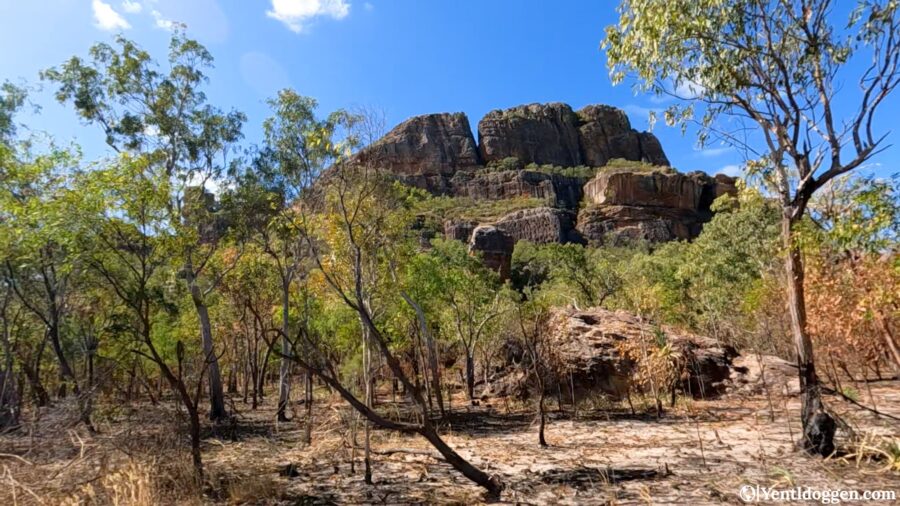
Burrungkuy (Nourlangie) region and Nanguluwurr Gallery:
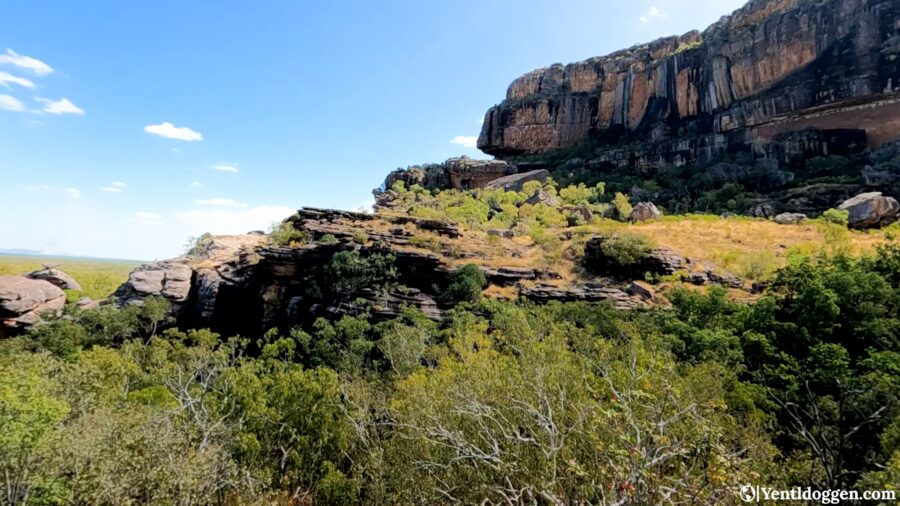
Open from 8 am to sunset, the Burrungkuy (Nourlangie) rock art site is another must-visit site while exploring Kakadu National Park. The region is well known for its rock art sites. Furthermore, there are also some excellent walks here that allow you to explore the area further. The walks take you through monsoon forests and stone landscapes.
Nanguluwurr Gallery is another excellent rock art site in the Burrungkuy (Nourlangie) area. Located at the northern end of Burrungkuy (Nourlangie), you must walk 1.7 km to reach the gallery, but it is worth it. See depictions of ancestral spirits, animals, and even some of the early contact with Europeans. The contact art here depicts a two-masted ship used by the early Europeans.
Keep your eyes out in this region for the chestnut-quilled rock pigeons and black wallaroo.
Walks in the Burrungkuy region:
Anbangbang Billabong:
Distance: 2.5 km loop walk | Difficulty: easy
An easy loop walk through the savanna woodlands and paperbark forests that takes you around the billabong. Accessible only during the dry season.
Nawurlandja Lookout:
Distance: 600 meters return | Difficulty: Moderate slope.
Offering the best views over the Anbangbang Billabong to Burrungkuy (Nourlangie) and the Arnhem Land escarpment, this is another excellent spot to watch the sunset! Furthermore, this is a fantastic lookout to gauge just how magnificent and grand in scale Kakadu is.
Nanguluwurr gallery walk:
Distance: 3.4 km return | Difficulty: Moderate
Allow two hours for this return walk. Explore not only the natural wonders of the region but also admire ancient rock art.
Kubara Pools Walk:
Distance: 6km | Difficulty: Moderate
Popular all year round, this walk takes you through savanna woodlands, sandstone country, and monsoon rainforests to the spectacular Kubara Pools. While open year-round, this walk is most popular during the wet season. Bring a picnic lunch and take in the best Kakadu offers in the cool of the Kubara Pools.
Mirray Lookout:
Distance: 2km return | Difficulty: Moderate to difficult. Hard climb
The Mirray Lookout might be hard to reach, but my oh my, is it worth it. The short and steep climb takes you to breathtaking 360-degree views of the north of Kakadu National Park. Best to tackle this climb early in the morning to avoid the heat of the middle of the day. A great way to break up the day!
Yellow Water Cruise:
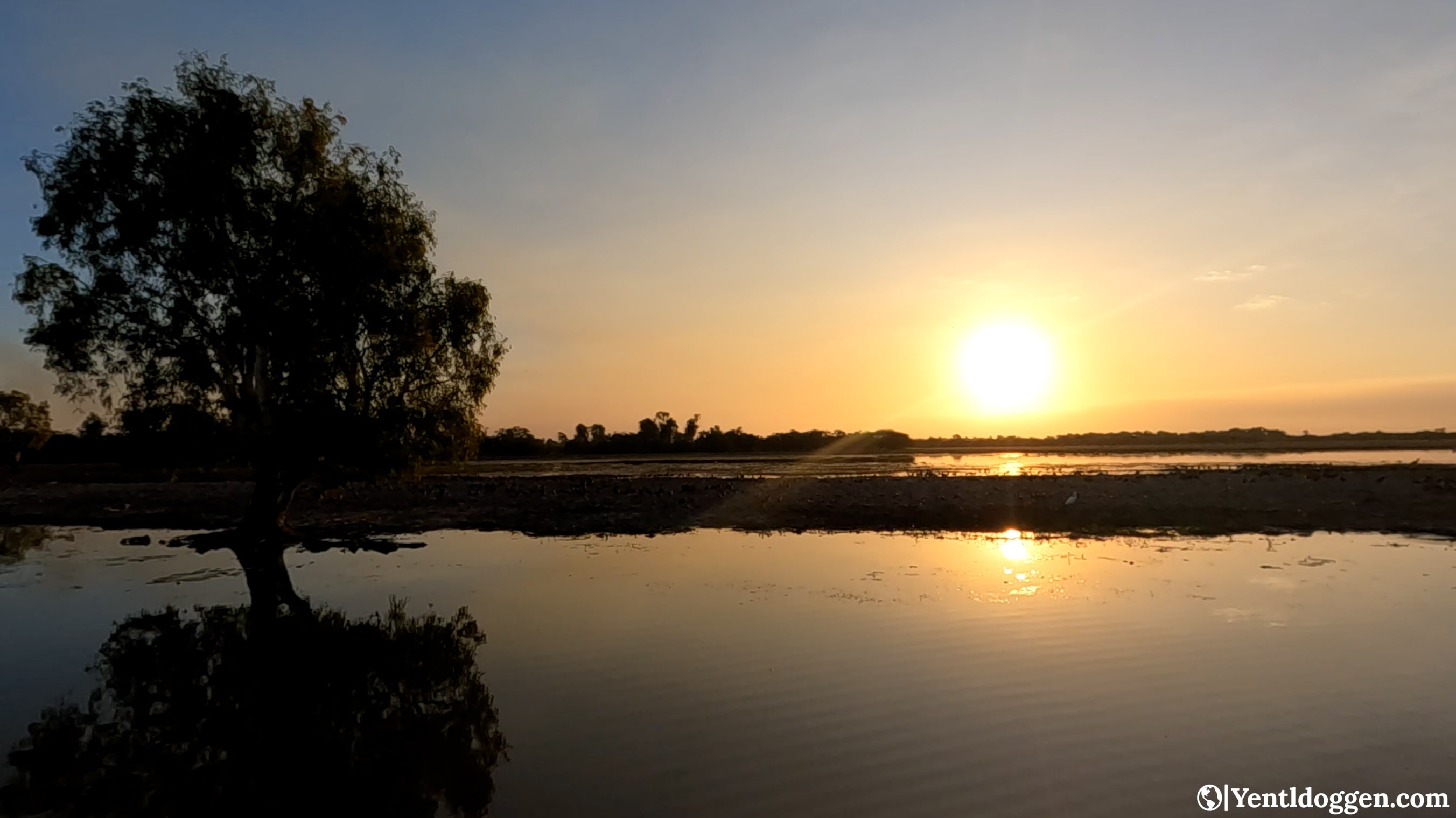
If there is any cruise you are thinking about doing in the Kakadu National Park, it should be this one. The Yellow Water Cruises are an incredible experience and even better at sunset. Yellow Water Billabong is Kakadu’s most famous wetland. Located at the end of Jim Jim Creek, it is a tributary of the South Alligator River. Yellow Water Cruises operates exclusively on the Yellow Water Billabong, and their guides are all certified with Kakadu Knowledge certification. During the tour, learn about how the Bininj people use flora and fauna in everyday life, see crocodiles up close, and immerse yourself in this beautiful region of the country. We highly recommend the sunset tour, as it is the perfect way to end an unforgettable day in the Kakadu National Park.
Prices vary depending on the time of year and the time of day you wish to take the tour. Prices range from $105 to $130 (adult).
Warradjan Aboriginal Cultural Centre:
The Warradjan Aboriginal Cultural Centre is the best stop for anyone wanting to learn more about the Indigenous culture. Through the extensive exhibit, you can learn more about what it is like growing up in Kakadu for the Traditional Owners, the complicated kinship laws, and see different tools, message sticks, and artworks. The cultural centre is open daily from 9 am to 5 pm (dry season) or 9 am to 3 pm (wet season), though times can vary depending on the current weather in the park.
Cooinda Lodge:
Cooinda Lodge is the ultimate accommodation base for exploring Kakadu National Park and a great place to stop and eat! There are two onsite restaurants available open for breakfast, lunch, and dinner. There is also a pool, bar, and gift shop! Check opening times before you go, as they can change depending on the season.
3. Southern Kakadu:
Gungurul Lookout:
Distance: 4km return | Difficulty: Moderate
Accessible all year round, the Gungurul Lookout is another great lookout. With lovely views across the valley, it is a great spot to stop, stretch your legs, and have a bite/picnic.
Bukbukluk Lookout walk:
Distance: 0.5 km | Difficulty: easy. The first 50-100 meters is wheelchair accessible.
Another fantastic short walk accessible to all ages. The perfect spot for a picnic lunch to stretch your legs.
Yurmikmik Walks:
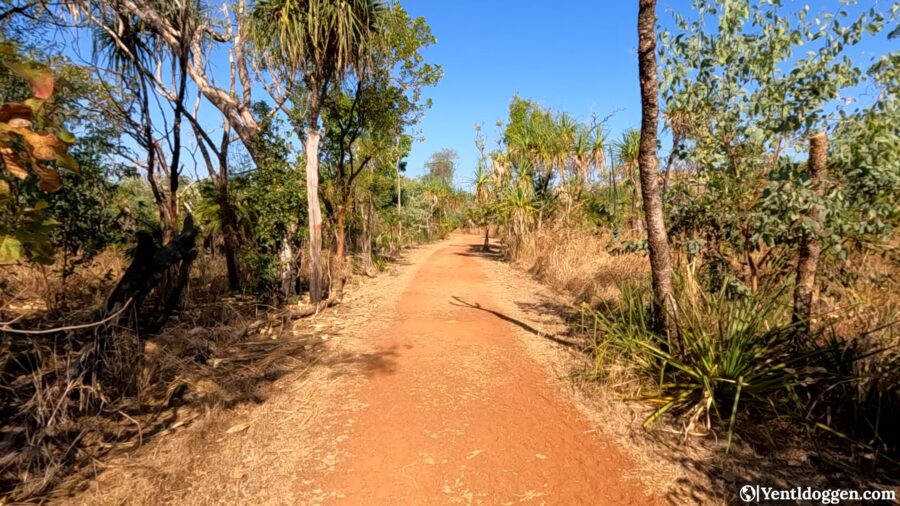
The Yurmikmik walks are interconnected hiking trails that create a fantastic wet-season walking experience. There are four different walks that you can choose to take individually or merge to do them all.
Boulder Creek Walk:
Distance: 2km return | Difficulty: easy
Unlike the other three, this is an excellent and easy short walk.
Yurmikmik lookout walk:
Distance: 5 km return | Difficulty: Moderate
This walk follows the Motor Car Falls track before a slight incline takes you to the lookout. Magnificent views over the South Aligator River catchments and the south of the park await you.
Motor Car Falls:
Distance: 7.5 km return | Difficulty: Moderate
A favourite Kakadu trail, the Motor Car Falls trail is another fabulous wet season walk. The trail takes you along an old exploration track through the southern hills and ridges.
Kurrundie Falls:
Distance: 11km return | Difficulty: Moderate
You need a permit to walk in the Kurrundie Falls, but this walk is perfect for adventurers.
4. 4WD accessible only:
Jim Jim Falls:
Kakadu is home to two iconic and well-known waterfalls—Jim Jim Falls and Twin Falls. The falls flow from the start of the wet season or tropical summer right through to mid-July. Best seen from above during the wet season on a scenic flight, you can also hike around the base of Jim Jim Falls during the dry season. The 2 km return walk takes you through the monsoonal forest and over the boulders to the deep plunge pool at the base of the falls.
Twin Falls:
The other iconic Kakadu waterfall is Twin Falls. Again, during the wet season, the falls are best viewed from the air, but during the dry, make sure you head down for a challenging 6 km return hike. The Twin Falls plateau walk is tough but has jaw-dropping views into the gorge and across the wilderness of Kakadu National Park. The Twin Falls gorge is undergoing a significant infrastructure upgrade and is set to reopen in dry season 2026.
Tours of Twin Falls and Jim Jim Falls:
No 4WD, but really want to see these iconic falls? No fear; there are plenty of companies operating tours from Darwin and inside the park to these falls. Operators include:
Never Never Safari Tours
Kakadu Adventure Tours
Kakadu Tours and Travel
Maguk:
One of Kakadu National Park’s lesser-known attractions, Maguk, should be on everyone’s list. That is if you have a 4WD. Less than an hour’s drive from Cooinda lies this pristine natural plunge pool with a cascading waterfall. Surrounded by steep gorge walls, relax in one of the only swimming holes in Kakadu after a short 1 km walk through the monsoonal forests from the car park.
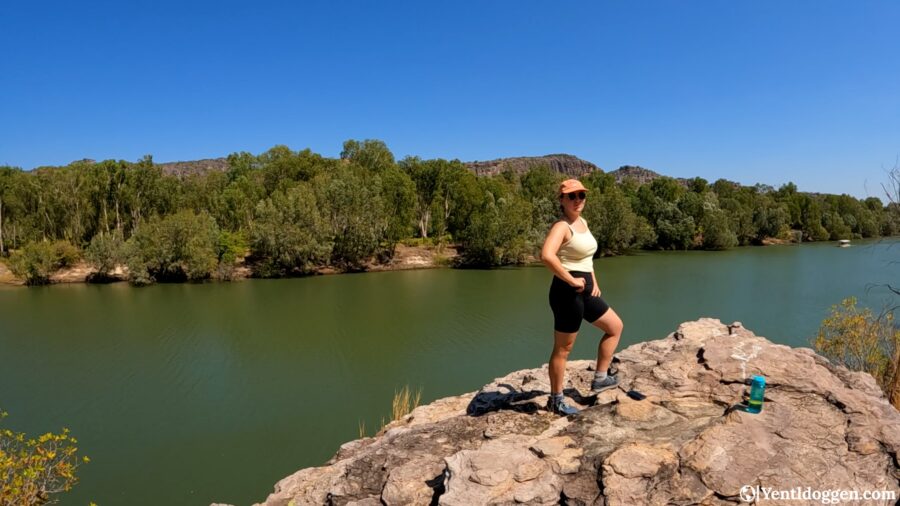
Kakadu National Park is one of a kind and cannot be missed while travelling through the Northern Territory of Australia. Keep a lookout for our upcoming Northern Territory Road trip post to see how you can do all the best things in one go! A dual World Heritage Listed site for a good reason; you will not find another experience like this.
Are you enjoying reading our travel guides? Please let us know in the comments below! If you need help or have questions about exploring this fantastic world, check out all our blogs and vlogs or contact us through the contact page. We are happy to help with all your travel needs and questions!
To keep up-to-date with future adventures and travel guides, follow us on Facebook or just simply check this website regularly. We can’t build this platform without our readers, so we thank you for your continued support. Stay tuned for many more adventures to come!