

Rhythmic Permutations – eBook | PDF download

€5,00
-> High-definition digital download of Rhythmic permutations (PDF).
Upon ordering, you get two (2) downloads valid for 365 days.
Rhythmic Permutations is an eBook that logically generates all possible rhythmic combinations within a set number of beats. It starts with 3-beat patterns and builds through more than 8,174 variations all the way to 12-beat combinations. Perfect for rhythm studies, reading practice, and even generating fresh composition ideas.
About the eBook:
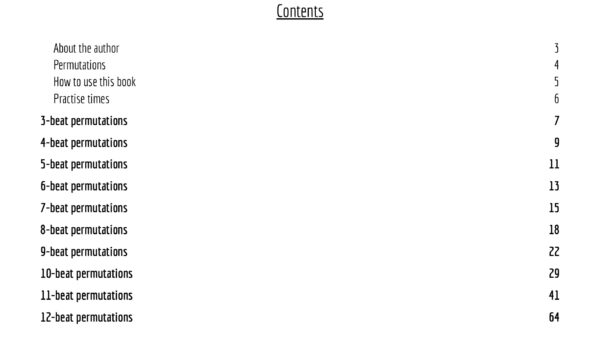
The eBook kicks off with 3-beat variations, then flows into chapters covering 4, 5, 6, 7, 8, 9, 10, 11, and 12-beat patterns. Spanning 107 pages, it delivers 8,174 unique rhythms—your ultimate resource for exercises, studies, and sight-reading. It’s a solid foundation for advanced rhythm mastery, but don’t stop there: experimenting with these patterns reveals a world of creative rhythmic possibilities.
There are countless ways to apply it. For instance, the 8-beat combinations work brilliantly as a bar of 16th notes in 2/4, eighth notes in 4/4, or even quarter notes in 4/8. That’s merely the beginning—dive deeper, play around, and you’ll discover it’s far more than an archive; it’s brimming with rhythmic potential.
What Makes Rhythmic Permutations Unique:
My first instructional eBook stands apart from the crowd—no classical music notation, no step-by-step instructions. It’s a pure visualization of the permutations concept. (Learn more about permutations here.) Plenty of books explore its endless applications, and I’ll cover those in future releases alongside my online drum lessons.
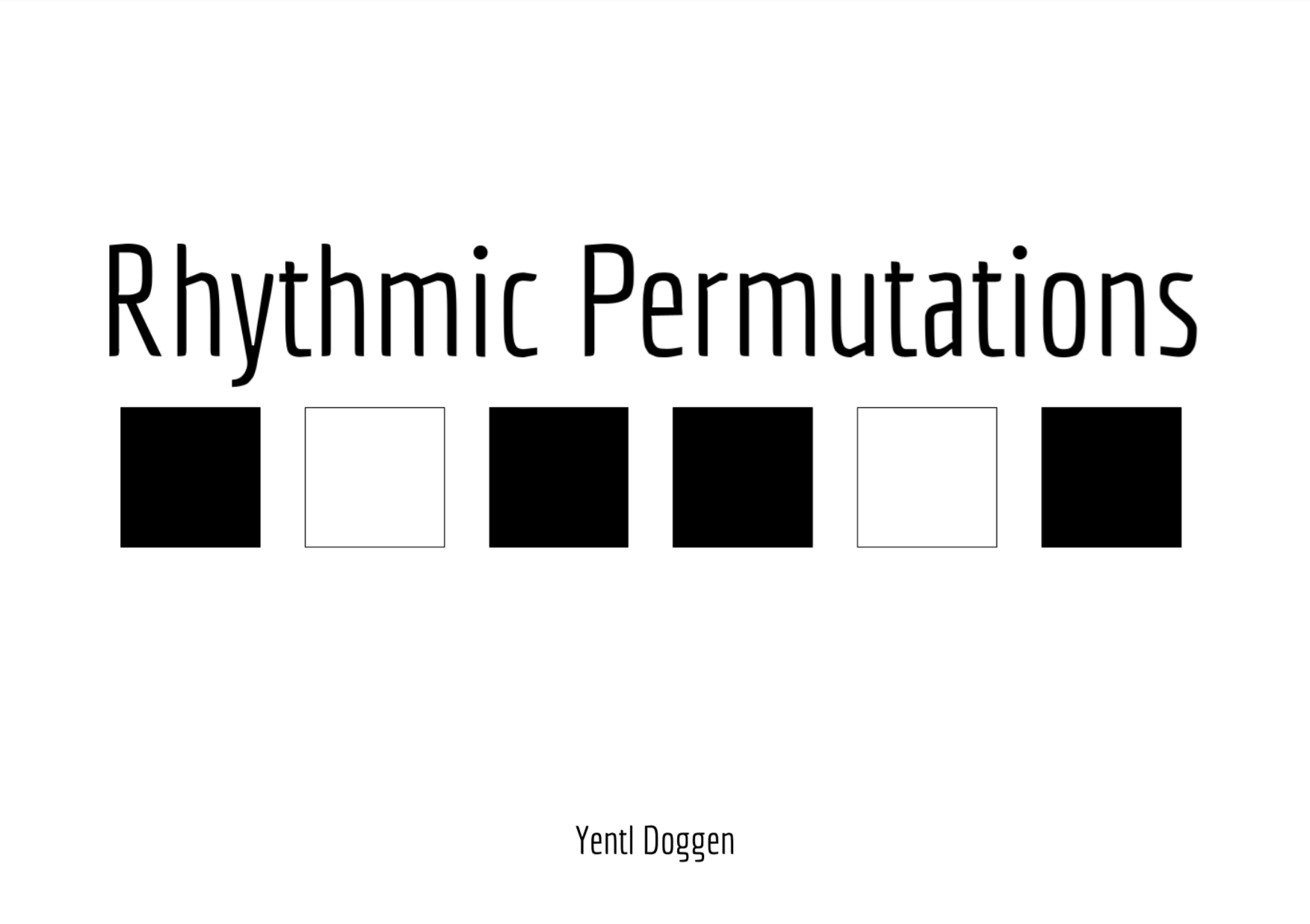
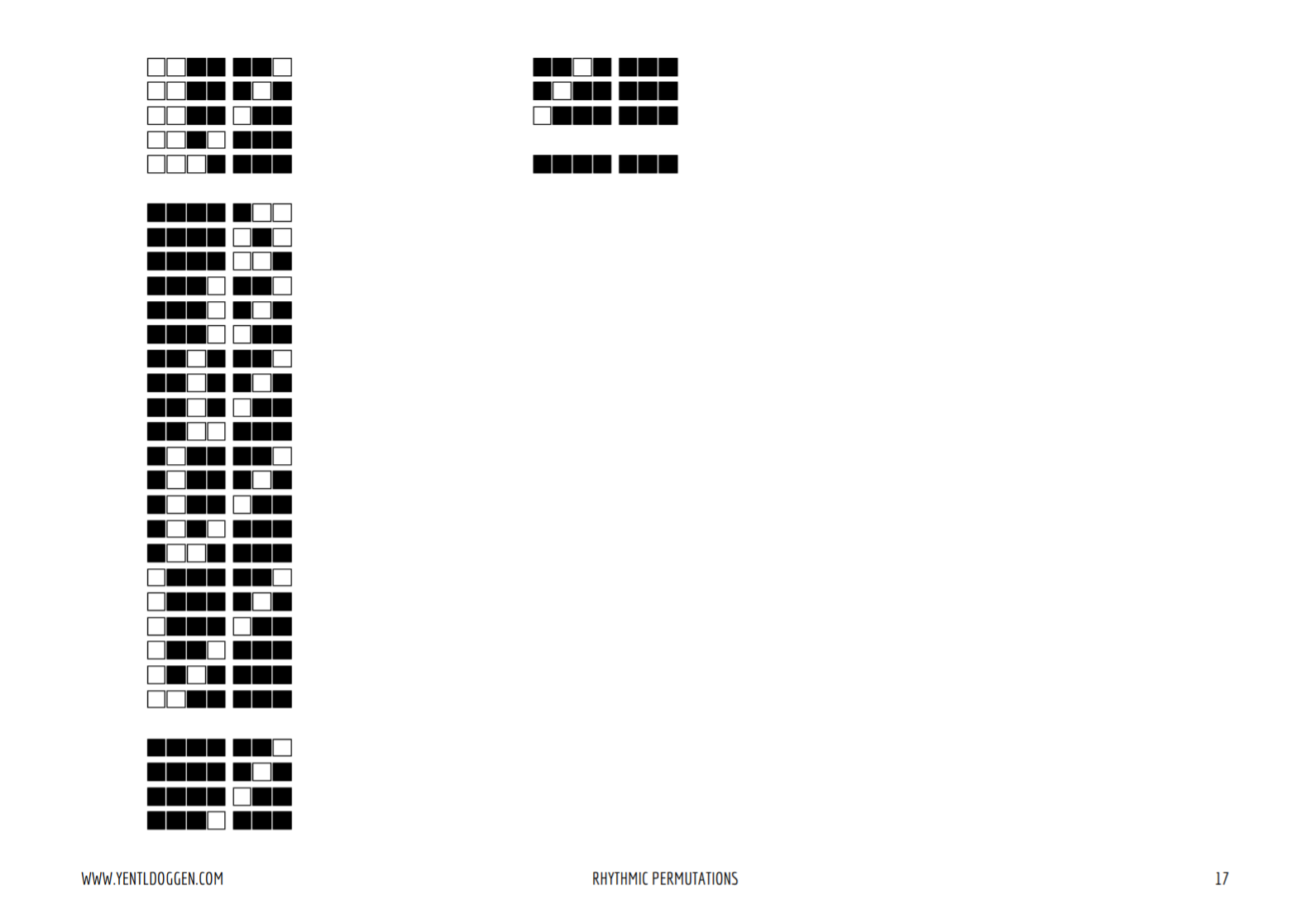
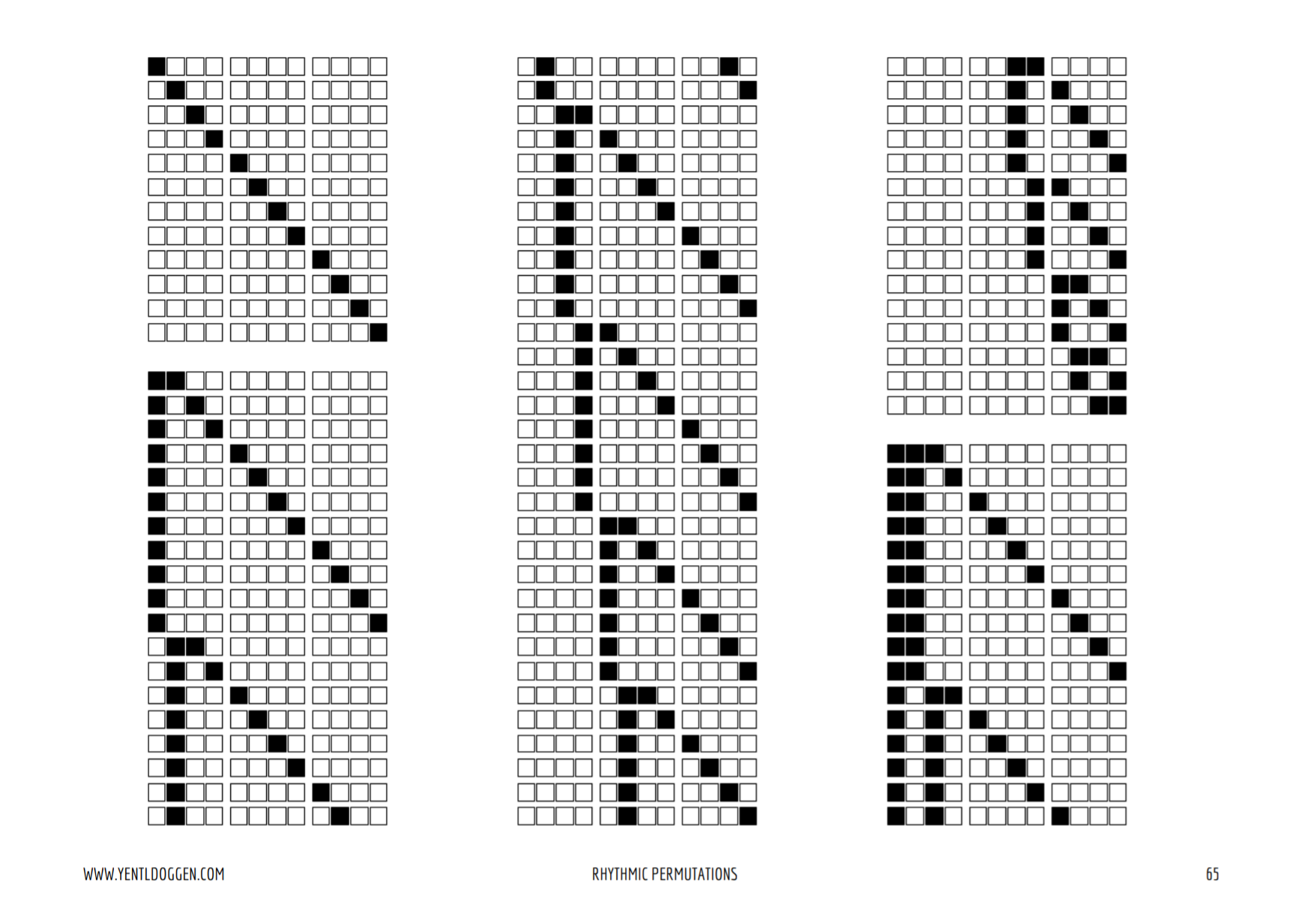
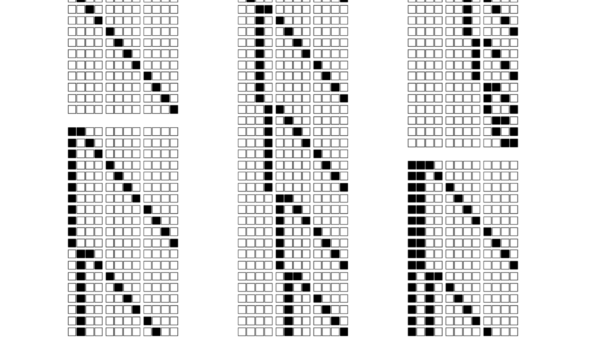
White dots represent all available beats, while black dots trace the active rhythm. Skipping notation keeps it flexible—you decide the subdivisions on your instrument.
Permutations Explained:
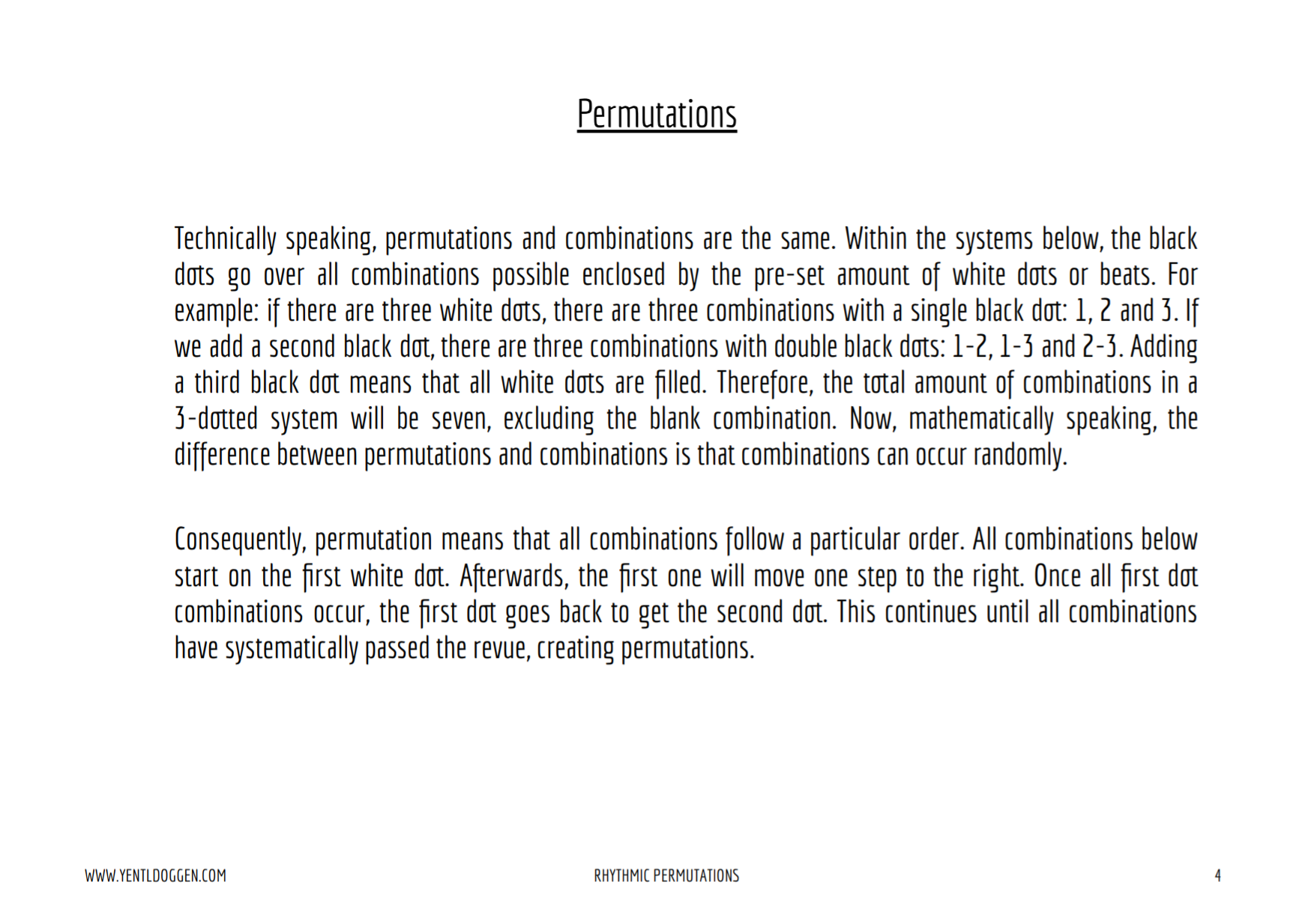
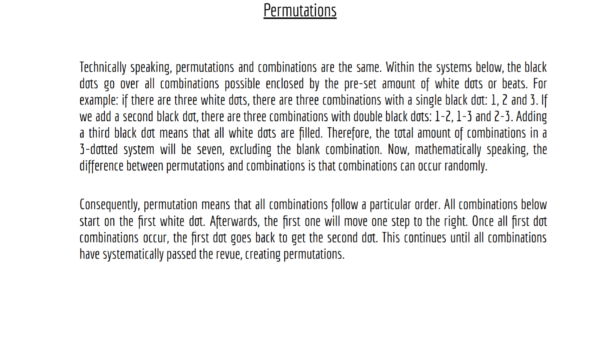
Technically, rhythmic permutations and combinations overlap in this system: black dots cycle through every possibility within the fixed white dots (beats). Take three beats as an example—with one black dot, you get three options: beat 1, 2, or 3. Add a second dot for pairs like 1-2, 1-3, and 2-3. A third fills everything, totaling seven combinations (excluding the empty one).
The key distinction? Permutations follow a strict order. Every pattern starts on the first white dot, then shifts right one step at a time. Once those are exhausted, it resets the first dot and advances the second—systematically covering every variation for true rhythmic command.