
Permutations: Rhythmical Matrix
A Rhythmical Matrix is an amazing tool for developing precision, phrasing awareness, and rhythmic flexibility on the drums. It helps you visualize how subdivisions interact, opening up new ways to approach timing, accents, and coordination. As some of my upcoming drum lessons will explore rhythmical permutations and matrix-based practice methods, I want to share a variation that divides 16 into 3 and 2 — a powerful concept for exploring syncopation and uneven groupings within a sixteenth‑note framework.
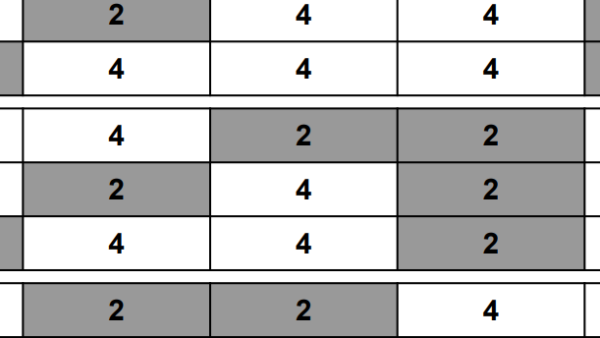
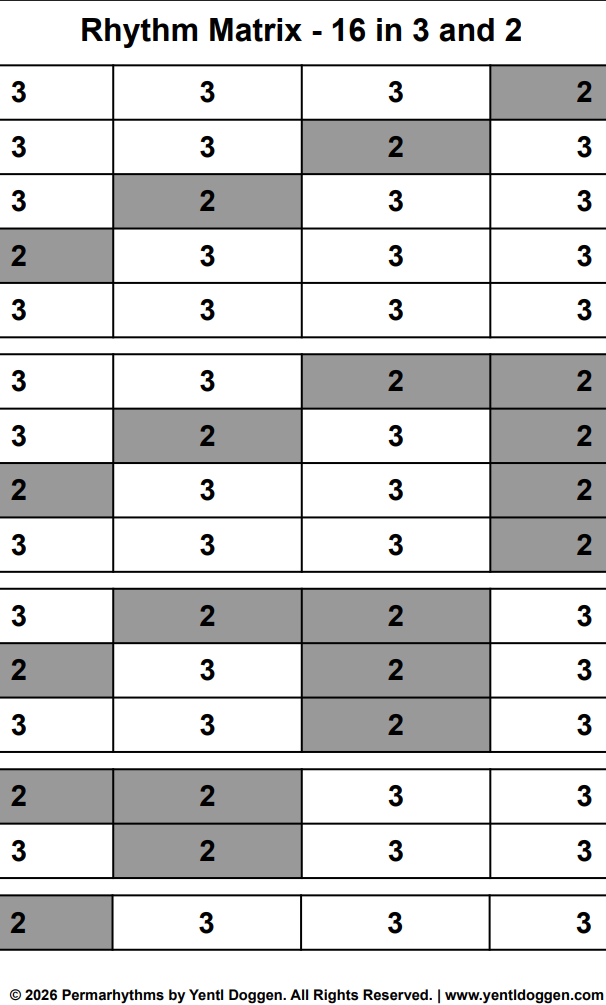
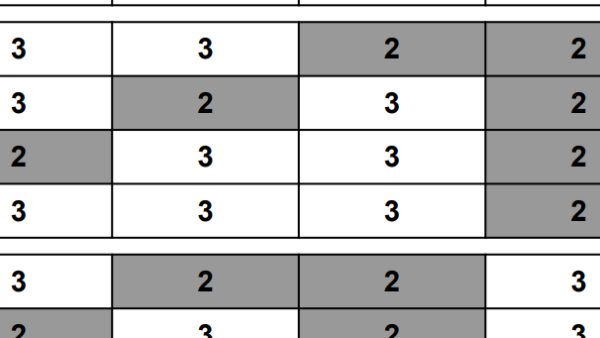
This Rhythmical Matrix offers a clear overview of how to group 16 subdivisions (typically sixteenth notes in 4/4 time) into mixed patterns of threes and twos. It creates fascinating rhythmic tension and release that you can hear in modern jazz, fusion, and even progressive rock drumming. You’ll soon find supporting exercises and downloadable printouts on my website. If you’ve ever been a student in my drum classes, you’ve likely experienced how these asymmetric groupings can transform both your groove and solo vocabulary.
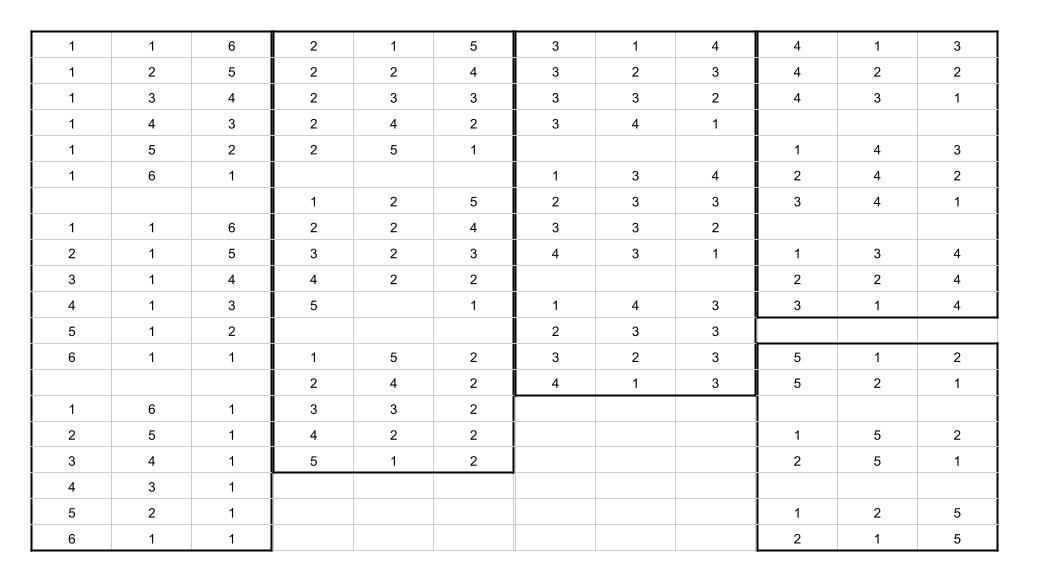
Rhythmical Matrix – 16 in 3 and 2
Rhythmical matrices serve as structural maps that help drummers explore permutations and phrasing concepts within a clear mathematical framework. The aim is not solely to create complex phrases, but to visualize rhythm in a way that deepens your sense of subdivision and pulse. By studying 16 divided into alternating groups of 3 and 2, you uncover subtle shifts in feel — moving between duple and irregular phrasing while maintaining a steady pulse.
When dividing rhythmic values, the divisor can never exceed the value itself, but combinations that add up to 16 open up an immense field of rhythmic possibilities. You can experiment with groupings like 3‑3‑3‑3‑2‑2, 3‑2‑3‑2‑3‑3, or even 2‑3‑3‑2‑3‑3, each producing its own unique flow and accent pattern. These structures make great warm‑ups for coordination, metric modulation, and comping in odd groupings.
Try writing out a few different 16‑subdivision combinations, then clap, tap, or orchestrate them across your kit. Once you begin to feel these shifting pulses within a steady groove, the matrix becomes a creative playground — a space to experiment with syncopation, displacement, and dynamic accents.
Enjoy diving into the possibilities of this 16‑in‑3‑and‑2 Rhythmical Matrix!