

Permutations: Rhythmical Matrix
A Rhythmical Matrix is a fantastic tool for becoming a more creative and precise drummer. It helps you visualize rhythmic groupings and understand how subdivisions interact, opening the door to new coordination ideas and phrasing concepts. Since some of my upcoming drum lessons will focus on rhythmical permutations and matrices, I’d like to share one in particular — a matrix that divides 12 into 3 and 2. This concept is especially useful for drummers studying jazz, Afro-Cuban, or groove-based styles that rely on triplet or 12/8 feels.
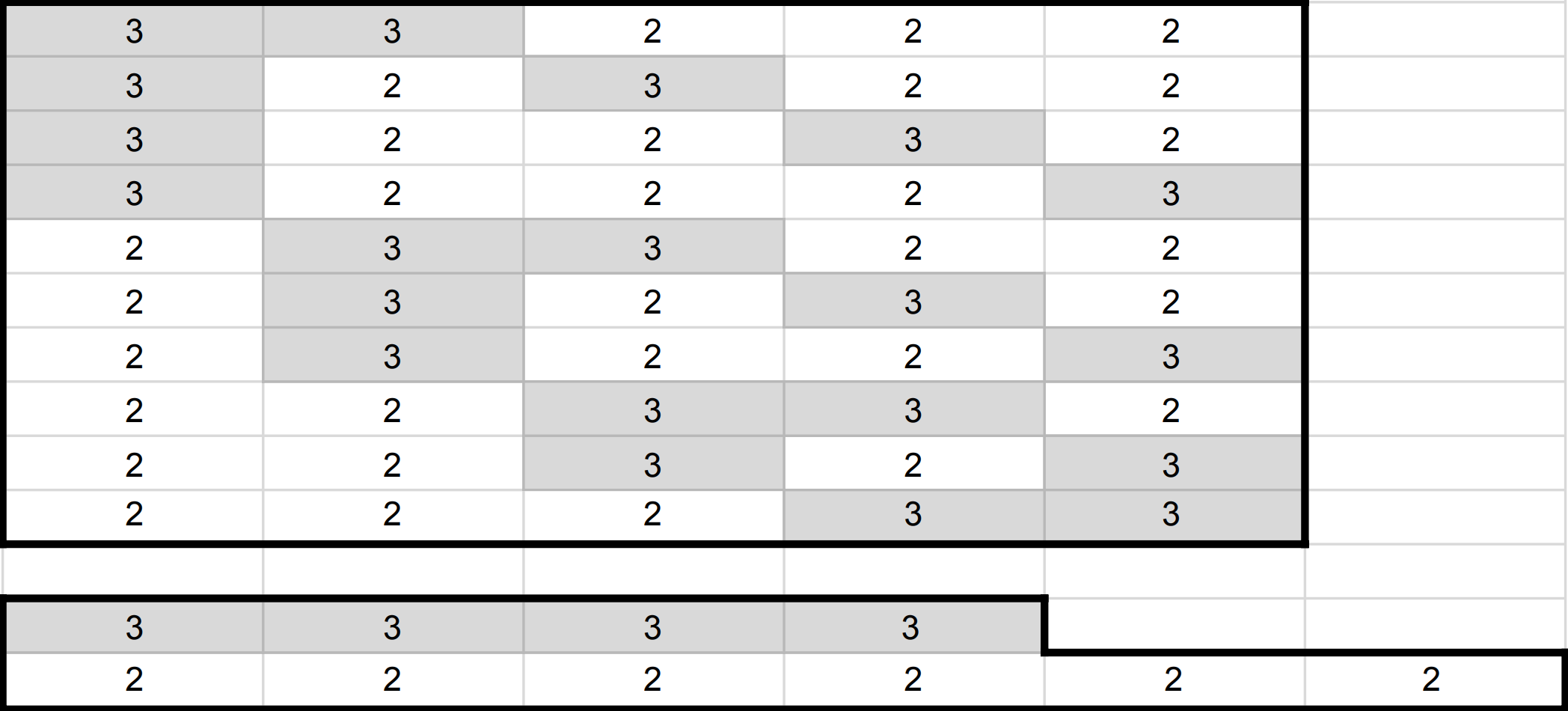
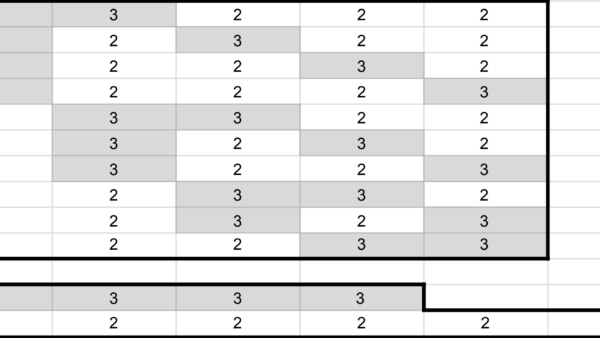
This Rhythmical Matrix provides a clear visual overview of the eighth-note grid within a 12/8 time signature, or equivalently, the triplet subdivision in a 4/4 measure. It forms a strong foundation for countless rhythmic exercises, from comping ideas to advanced coordination drills. You’ll soon find related examples and downloadable exercises on my website. If you’ve ever been a student in my drum classes — whether in person or online — you’ll already know how to apply this matrix effectively in your own practice.
Rhythmical Matrix – 12 in 3 and 2
A rhythmical matrix acts like a guiding map for exploring permutations within specific time signatures or rhythmic values. The goal isn’t simply to create complex rhythms, but to clearly see the mathematical structure that supports those rhythmic variations. Visualizing rhythm in this way helps you unlock new phrasing possibilities, improve your time awareness, and gain more control over syncopation.
When dividing rhythmic values, the divisor can never exceed the value itself — because no further variations would exist beyond that. The number 12, however, provides a flexible and musical foundation. You can divide it into three groups of four, four groups of three, six groups of two, or even combine duplets and triplets for hybrid patterns. Each grouping produces a different pulse and accent structure, inviting you to explore how time feels when phrased differently.
Experiment with whichever configuration feels most natural or inspiring. Try writing out each version, playing them on a single drum, or orchestrating them around your kit. Over time, you’ll start to feel the matrix rather than just counting it — turning it into a creative framework for groove, soloing, and improvisation.
Have fun exploring the possibilities of this 12-in-3-and-2 Rhythmical Matrix!